
Are Lipscomb RAs unfairly compensated?
If you were to ask most students on Lipscomb’s campus what they think their resident assistants (RAs) are getting for their job, they’d probably guess free housing.
But, unlike many other schools, that isn’t the case at Lipscomb. In fact, Lipscomb RAs often only get paid for some, not all, of the work they do.
According to Ellie Heslon, a Johnson Hall RA in her first year, and Tyler Jorden, a second-year High Rise RA, they get just $9.50 an hour for a set 15 hours each week. However, RAs handle nearly everything involved with dorms, housing emergencies and residence life events.
“My typical responsibilities include Wednesday Nights We Eat, lobby duty, frequent room checks of residents, being on call for emergency situations, providing resources to residents and overall just being available for them,” said Jorden.
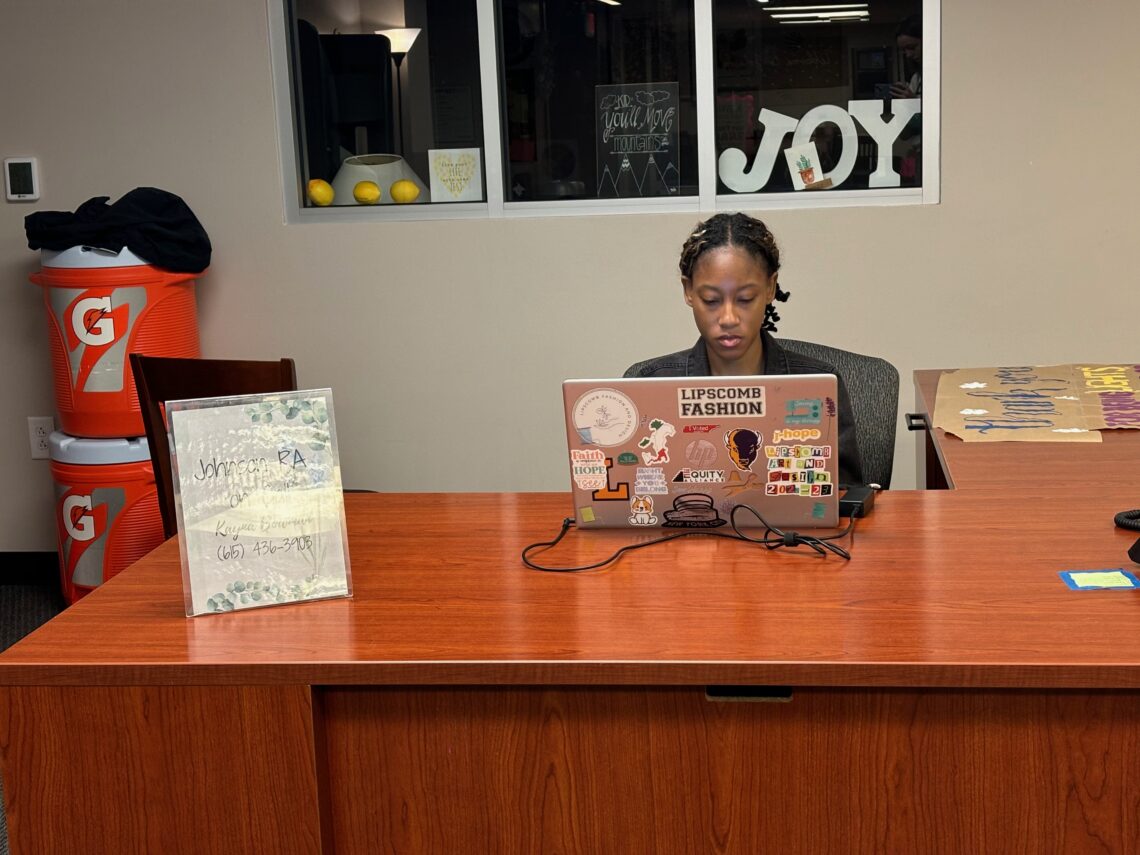
Heslon said her responsibilities include lobby duty, being available for students’ questions and emergencies until midnight or later at least once a week. They also include room checks, wellness checks, setting up rooms every semester, delivering Slingshot books, decorating the halls, planning hall events and running Waffle Wednesday. Heslon said that each RA had to plan four of their own events each year, adding to their list. Halloweek, and other campus events tied to Res-life, are also mainly planned by RAs.
RAs also open and close the dorms each break, leaving a little later and returning a little earlier than the rest of the student body. Among the responsibilities tied to that, they clear out fridges in each room when necessary and do a full clean out of their dorm’s kitchen.
In addition to all of these normal responsibilities, RAs are also expected to step in when an emergency or unusual situation happens on campus. And over the course of the 2025-26 school year, Lipscomb has seen quite a few. Two of these include the snow and ice storm, and the mold debacle in Fanning Hall.
According to Heslon, during the storm the RAs in each dorm were required to take shifts manning their hall’s front desk, in the cold, all day long. “There had to be someone at the desk 12 hours straight, during the day,” Heslon explained. The RAs took one-hour shifts, to help break up their time in the cold, but each RA took multiple shifts a day.
The workload for the storm was far more than just sitting at the desk, however. RAs were also constantly on call, responding to questions their residents had, and helping every student on campus during the chaos. Because RAs are usually the first people students go to, they wound up working almost all day, every day, during the storm, even when they weren’t manning the lobby.
“We were doing a lot of communicating with the students,” Heslon said. “We were on for a lot of the questions, even though we didn’t have a lot of answers. We were their main point of contact. They would come to the desk or come to our rooms… there was a lot more of just constantly being on, emotionally, and being ready to respond to people.”
The responsibility list grew during the mold issue too, RAs setting up rooms in other girls’ dorms to move the Fanning girls into or helping those girls as the promised week stretched out into a month.
“Because they only packed for a week, they needed a lot of help getting adjusted… many of the students needed extra care and attention because they were away from most of their belongings and their friends. It was just more people to check in on in the hall,” Heslon said. “And when they left too, we had to check the rooms. I was finding cleats and stuff that they’d left behind,” she laughed.
In spite of all of these responsibilities, RAs are not offered overtime pay. In fact, they’re not even offered full-time pay, as each work week is capped at just 15 hours.
“[Overtime pay] was brought up,” Heslon said about the snowstorm chaos. “One of my RA friends actually asked if we’d get anything, but so far we haven’t heard anything concrete.” Jorden also said that he’d never gotten overtime pay.
“I’ve talked with my friends before about what they think I get as an RA, and most of them assume that I get room and board covered, but that’s not the case,” Jorden explained. “As RAs we pay the rate that’s the same as having a roommate for a private room.”
Heslon explained that each RAs room rate was set at $3,500 regardless of which dorm they lived in. For her, in Johnson, this is a $750 discount.
“I feel that a bigger room and board discount or even getting it for free might make more people interested in becoming an RA or make the residents feel their RA’s are being better taken care of,” Jorden said.
“I wish that we were given free housing,” Heslon said. “It makes the most sense in my mind to be given the space for taking care of the people. It’s hard to quantify the time that you spend talking with residents.”
But here’s the thing: most other colleges offer their RAs free room and board. Belmont does, Austin Peay does, Vanderbilt does and Trevecca does, just to name a few. All of these are in addition to some form of paycheck or stipend.
Despite the low compensation, both Jorden and Heslon spoke fondly about their RA memories at Lipscomb.
“My favorite parts of being an RA are getting to see how people grow through their freshman year, as well as getting to hang out with the other RAs and put on fun events for the residents,” Jorden said.
“It’s been really sweet to lean on my team and support each other,” Heslon smiled. “I feel like I’ve been able to make really sweet connections, and feel like I’ve been able to make a difference with a few people on my hall, which has been really precious.”
Though Jorden and Heslon both said it’s not bad being a Lipscomb RA, the difference in treatment begs a crucial question: are Lipscomb RAs being unfairly compensated for everything they do? And if they are, why?
Micah Barkley
Micah Barkley serves as Herd Media's editor-in-chief and chief sports photographer. She is a senior Journalism major with a minor in German and a passion for photography. This is her fourth year on Herd Media’s staff, having started as an assistant editor, then becoming the features editor, before being promoted to editor-in-chief. Outside of writing and learning languages, she enjoys riding horses, music, basketball, swing dancing and line dancing, and spending time with her friends, among other things. She has writing experience with The Numismatist – a publication of the American Numismatic Association – and The Williamson Scene and is an aspiring author with two books currently published under the pen name Summer Ryland. When not at Lipscomb, she lives on a communal cattle ranch in the great state of Texas.