
Opinion: Before you vote, read the local news
For the first time in eight years, Tennessee will vote on a new governor during the midterm election. The race has drawn national attention, as Memphis Democrat Jerri Green challenges famed Republican Marsha Blackburn for the seat.
Voters will also cast their ballots in all nine of the state’s congressional districts, as well as for a state senator. Other factors, such as the controversial redistricting of the state and Trump’s recent Tennessee appearances, have brought additional interest to this election.
However, if 2026 is anything like the years before it, less than 35% of Tennessee voters age 18-29 will vote in this year’s midterm election.
On college campuses, that number drops to 30%. Compare that to over half of students who vote in presidential elections.
The numbers show that when the conversation becomes local, college-aged voters are less likely to chime in. This isn’t because college students don’t care about their community. It’s because they’re not receiving local news.
It’s been shown that well over half of young adults get their news from social media. This information is chosen by algorithms reinforced by user engagement. Some college-aged voters won’t happen across any election news besides the most inflammatory tidbits. Others will have feeds inundated with political content. Many will only hear from voices on one side of an issue.
For local races, consumers who rely on algorithms risk missing out on important information.
“The local races aren’t necessarily going to be covered by an algorithm, or even picked up much by AI,” said Jessica Davis, former vice president of AI product at USA Today. Davis served in the role for three years and specialized in teaching journalists to use AI responsibly.
New AI technology, however, further complicates the information landscape. Young people are more likely to view AI and AI summaries as reliable sources of information. When looking for information on an election, large language models condensing reporting from local news outlets are often encountered before the outlets themselves. These summaries are not intended to provide complete pictures. Despite this, in an age of quick information, young people might stop at the summary.
“People who are responsible click into those links and don’t just trust those summaries are correct,” said Davis. “If something’s going to impact your life, you should click through to the main source.”
To be a responsible voter in this midterm, relying on social media feeds and AI-summarized paragraphs isn’t enough. According to Davis, students need to start looking to “local sources of information, which are written by people who live here, who are impacted by what the outcomes of the votes are.”
For students at Lipscomb and other Nashville universities, the Nashville Banner is one of these local sources.
The digital news outlet relaunched in 2024 under the leadership of veteran journalists Steve Cavendish and Determina Kalodimos.
“We were tired of the loss of public service journalism, and so we founded the Banner,” said Cavendish, president and editor of the Banner.
Sources like the Nashville Banner don’t just tell local stories. They prepare readers for times like these: a critical election with a gubernatorial race and presidential attention.
“Our job is to dig in and… help people in Nashville understand the people and institutions that affect their day-to-day lives,” said Cavendish. “If we can provide illumination about that… they’ll be better informed voters, and they’ll be better informed citizens.”
To achieve this, the Nashville Banner doesn’t use a paywall. They’re not alone in this. The Nashville Scene and local news stations’ websites, like WKRN News 2, are free to view. Just because the information is accessible, however, does not mean it will reach younger audiences.
“I’m not surprised that somebody who is 20 consumes something different than somebody who’s 60. That’s always been the case,” said Cavendish. “It just happens to play out now in social media terms.”
These different consumption patterns constitute the main obstacle between young people and local news. Most young adults do not feel as if local news is made for them.
Instead of telling young voters to return to traditional forms of media consumption, Davis believes that news needs to meet these consumers where they are at.
“Even if students are getting their news on social media, they’re still getting news,” said Davis. This expanded reach can even include AI. For USA Today, Davis helped develop an automation system that prioritized making local news easier to find. Efforts like these put local outlets in the places college students look for news.
Using social media for news doesn’t mean the information is untrustworthy. In fact, 94% of career journalists post their work to social media. Social media as a primary news source, though, does require more work from the consumers.
“People should seek out information… that’s been vetted, that’s trusted, that shows its work and that’s transparent about how they did their journalism,” said Cavendish. “I think that’s a lot more important than saying, ‘don’t get all your news from Twitter.’”
For young people wanting to make their voice heard in this upcoming election, intentionally seeking out news is not a bonus; it’s a must. AI summaries and social media feeds will not provide the information required to be an informed voter, especially in a local election.
“Citizenship and news consumption are inextricably linked,” said Cavendish.“People should take that civic obligation [to vote] seriously. I think the minute you become concerned about that obligation, you’re going to start looking for trusted information.”
Early voting in Tennessee runs from October 14 through October 29. Election day is November 3.
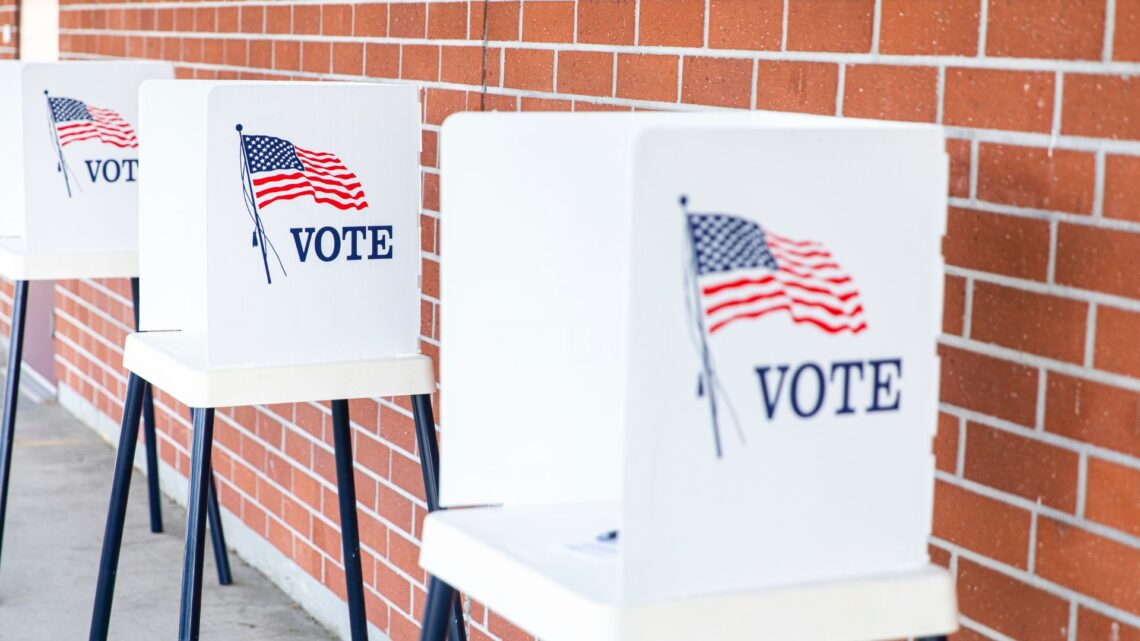
Feature image courtesy of Canva

Chrissy Julien
Chrissy Julien is a junior Journalism and French double major from Nashville, Tennessee.