

2026 and then: Ezell Center, built in 2006, changed campus life at Lipscomb
On a typical weekday at 8 a.m., the Ezell Center starts to fill up. Students and faculty walk in from all directions, headed to classrooms and offices. But before 2006, this structure wasn’t even here.
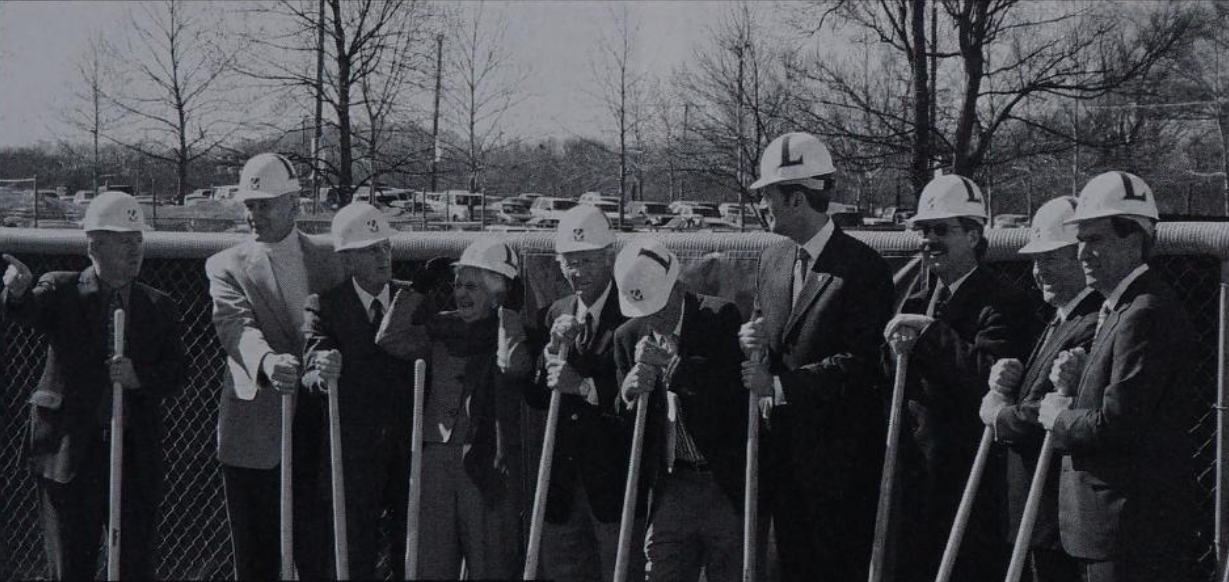
The site was once known as Onion Dell, home field of the Bison baseball team. Then in the 2000s, after the Bisons moved to Ken Dugan Field, Lady Bison softball became the home team on the site between the Student Activity Center and Belmont Boulevard.
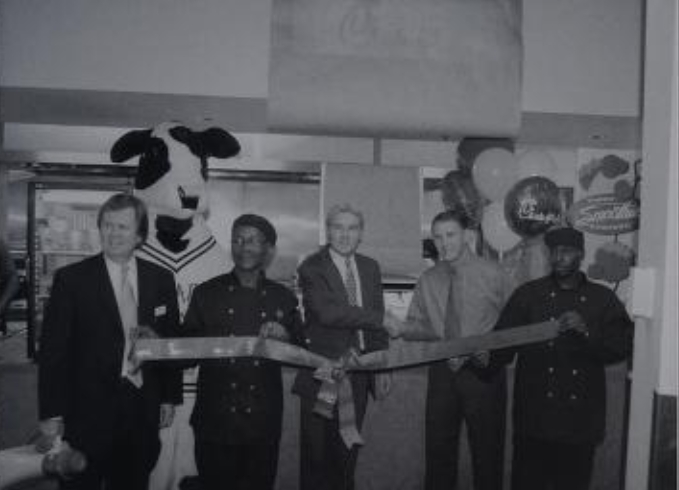
Vice President Danny Taylor (center) cuts the ribbon to commemorate the Ezell Center
When the Ezell Center opened in 2006, it completely changed how the campus worked. The 77,000-square-foot building brought classrooms, faculty offices, conference rooms and student spaces all into one place, something Lipscomb didn’t really have before. The building officially opened with a dedication and ribbon-cutting ceremony on Sept. 18, 2006, where students, faculty, and the Ezell family gathered to celebrate the new space.
The project itself cost between $10.5 million and $11.3 million and was named after the Ezell family, founders of Purity Dairies, who helped make the building possible. The building also includes key spaces such as the Doris Swang Chapel, Bill and Dot Mullican Television Studio and the J.M. McCaleb Mission Center, offering students both academic and hands-on opportunities. Another unique feature was its geothermal heating and cooling system, which cost about $1.2 million and helped the university save energy costs over time.
“This was the first office classroom building that had been built on campus in years,” said Craig Bledsoe, provost and chief academic officer from 1997 to 2022. “It was a big deal at the time when the building was built.”
The process of building it wasn’t simple either, as it bridged the administrations of Steve Flatt and Randy Lowry, Lipscomb’s 16th and 17th presidents. There was also an interim president, Harold Hazelip, during the transition.
“It was basically the design and beginning of construction with President Flatt,” Bledsoe said. “Then President Lowry came in that fall, and he made some changes in the building.” Originally, the building was meant to focus on biblical studies, still visible in the design today. One small detail most people don’t even notice is the windows.
“If you notice all the windows, the crosses, they were all built as crosses,” Bledsoe said. Even though that was the original idea, the building quickly became home to a lot more than just one department. Programs like political science, history, social work, and psychology all moved in, making it a place where students and majors from different programs crossed paths every day. One of the biggest changes came with the chapel on the second floor. It was originally smaller, but that changed quickly.
“When President Lowry got here, he wanted to make it larger,” Bledsoe said. “They added two sides to it to make it wider.” At the time, the building also stood out for its advanced design. The classrooms were filled with updated technology that made teaching easier and more interactive.
“One of the things President Lowry did was make sure the classrooms were technologically up to date,” Bledsoe said. “We put a lot of gadgets in the classrooms, smart boards and things like that.” The impact of the Ezell Center wasn’t inside the building. When departments moved into it, other parts of campus started to change too. Buildings like Burton were cleared up and eventually turned into what is now the College of Pharmacy.
“When all of those faculty members moved over here, they gutted that building and made it a college of pharmacy building,” Bledsoe said. The first big moment for the building was its dedication, which took place in a much smaller space than what students see today.
“When we dedicated the building, the dedication was held down in the hallway downstairs,” Bledsoe said. Since then, the Ezell Center has continued to grow along with the campus. New additions and changes have made it even more of a central spot, but the main purpose has stayed the same. Now, almost 20 years later, it is hard to picture Lipscomb without it. Students pass through it every day without really thinking about it, but it plays a big role in their experience.
“It’s hard to imagine campus without it now.”