
Lipscomb Choirs create community for students
Lipscomb University sits just within the peripheral vision of Music City. The campus shares a city with iconic venues such as the Ryman and shares a state with the birthplace of country music. While it may seem easy to be overshadowed by these monuments, Lipscomb University has a thriving musical
life that is authentic to the university. The choirs at Lipscomb contribute to this scene.
Dr. Matthew Taylor, the director of choral activities and vocal music education at Lipscomb’s campus, describes the choirs as “a culture that is high-reaching, but kind and intentional. I call our choir a work-hard, laugh-hard kind of room.”
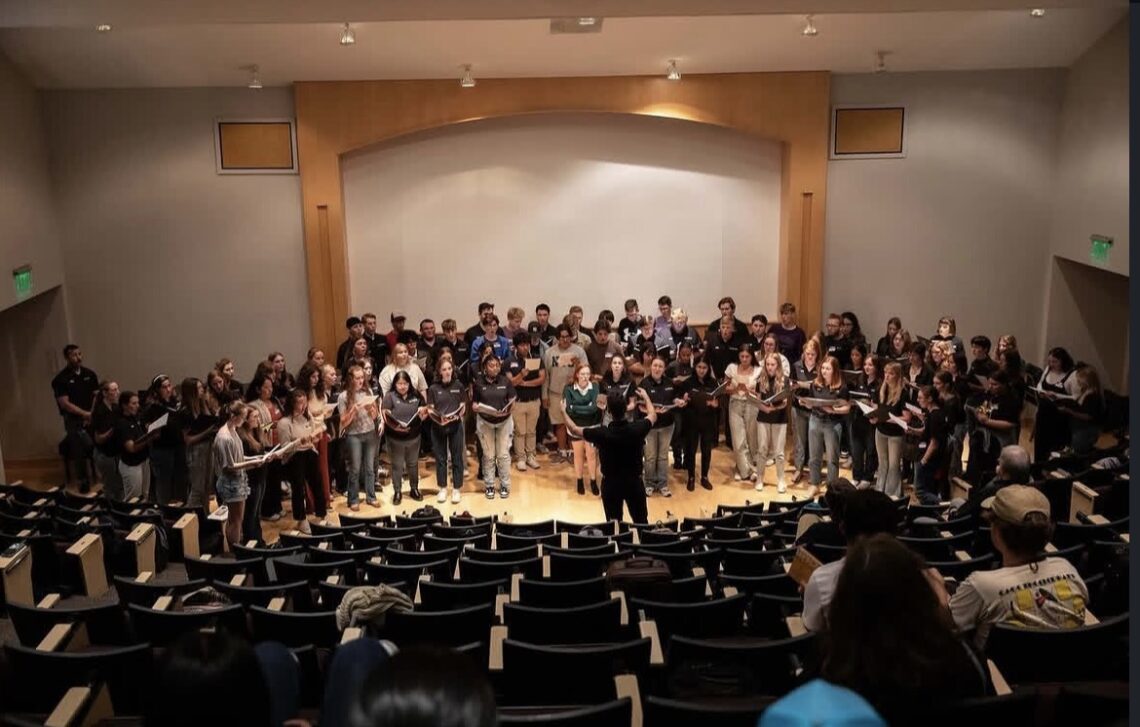
Taylor leads two of Lipscomb’s choirs: University Chorale and Concert Choir. The ensembles offer differing but equally valuable experiences for singer-students. “I want everybody to feel they have a place, and simultaneously, I also want to feel like our choirs can accomplish different things,” said Taylor. “I want a mutually beneficial experience.”
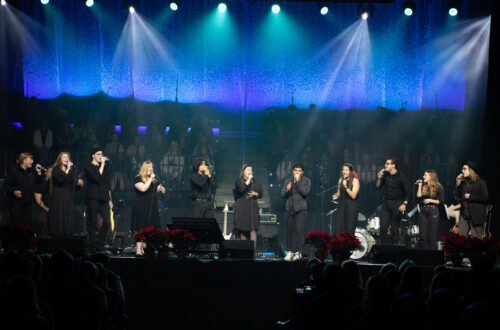
For this reason, Lipscomb boasts five vocal ensembles. These include University Chorale,
Concert Choir, Gospel Choir, Sanctuary and Vocal Jazz Ensemble. Each has a unique identity, with specific challenges and opportunities for the singers that are a part of them.
Hasset Assefa, a theology major at Lipscomb, has been a part of the Gospel Choir since her
freshman year. While the Gospel Choir focuses on the rich, cultured legacy of gospel music, it means more to her than just the music.
Originally a nursing major, Gospel Choir influenced Assefa’s decision to switch to theology. “Doing the thing I love, which is singing, and being able to minister to people through singing, is kind of what led me to choose ministry instead of what I was doing.”
For Assefa, the Gospel Choir provided a spiritual community that extended beyond the music. “Most of our time, we spend in prayer,” she said.
Emily Johnson, who has participated in both University Chorale and Vocal Jazz Ensemble on campus, shared a similar experience.
“[Choir] helped me be a part of a community early on. Moving to college was a huge transition, and making friends is one of those things everyone yearns for. Chorale did
not feel like a class, but a break within my week to see friends, and enjoy the privilege of singing with others.”
For Johnson, a history major with a minor in biblical archaeology, music has always been an
important part of her life. “I grew up taking part in church choirs, school choirs, instrument lessons and theatre. I always enjoyed it, and knew I wanted to continue making it a part of my college experience,” she said. Lipscomb choirs offered an accessible, communal way to continue her musical vocation despite
her other studies. “More (people) than you’d assume in the Lipscomb choirs are non-music majors,” she said.
“I think choir is such an excellent thing, and I think everyone can get a positive experience out of it,” said Taylor. Because of this, Lipscomb’s Choirs are accessible to everyone, ranging from non-music majors like Johnson and Assefa to students who’ve never sung in ensembles before. “I will always, always believe that choir should be non-exclusive art, one where your voice is valued and where you can come in and join and feel welcome.”
Some choirs, like Vocal Jazz Ensemble, perform at a higher skill level. Others, like University Chorale, don’t even require an audition to join. This makes the choir community at Lipscomb capable of serving all genres of singer-students on campus.
“My bigger mission is for students to find something that allows them to pursue goals in
community together,” said Taylor. “Choir is so excellent because we get to engage in hard work and beauty and friendship and community, all together, using our God-given instruments. That’s really special.”
Assefa, Johnson and Taylor all had the same message to share: Lipscomb choirs are worth it.
“For students in college – I don’t care if you’re a first-timer and you’ve never sung before or if
you’ve sung a long, long time and you’re wondering if you can keep doing it in college – the answer is yes. And there is a place for you,” said Taylor.