
2026 and then: Student Activity Center marks 35 years of campus recreation, community service
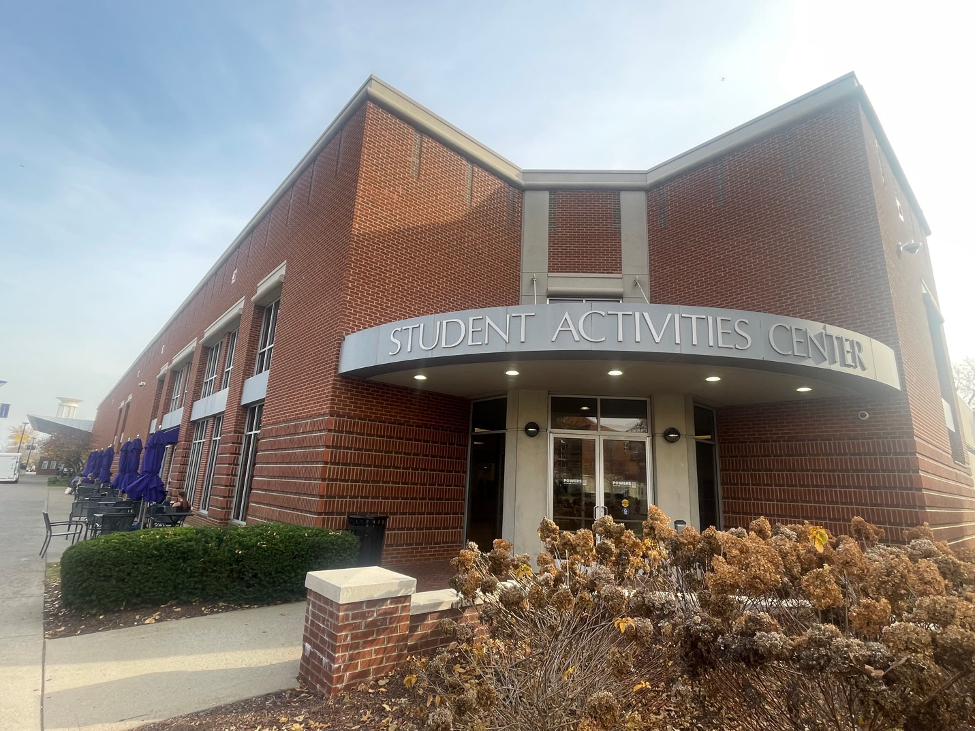
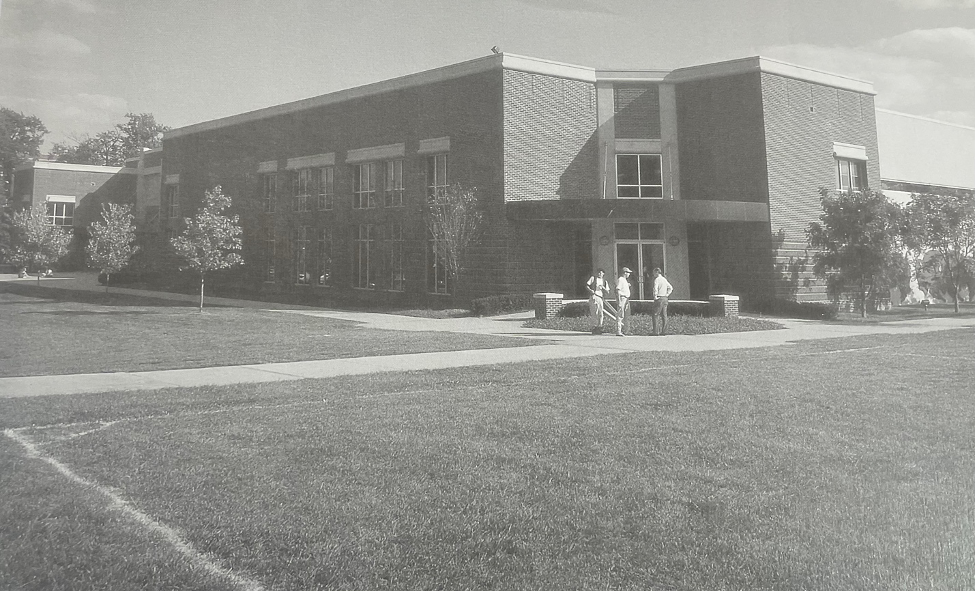
The Student Activity Center (SAC), a vibrant hub for campus life, celebrates its 35th anniversary in 2026, marking what’s been called a “paradigm shift” in campus recreation.
The late Lynn Griffith championed the creation of the campus’ first dedicated recreational facility for all students. Decades after the SAC’s opening in 1991, Griffith’s vision and the building’s evolution are remembered by Ruth Henry, a former colleague and department chair, who shared the story of how the SAC went from being a pioneering center to the physical heart of campus wellness.
“Dr. Griffith was the chairman of the kinesiology department at the time the SAC was built,” Henry said. “He oversaw the construction of it.”
Griffith held that role until a dedicated campus recreation director was hired a few years later. Henry, who moved into the building around 1992, recalls that even as the kinesiology department moved in, Griffith noted the center was “almost too small from the let-go.”
She said that the demand for student recreation space was so high that they quickly outgrew the facility. In the early 1990s, the second floor was fully occupied by the department of kinesiology (then called PE and Exercise Science), and the main floor looked dramatically different: a small lobby, a compact weight room across three windows, and a separate group fitness room, a setup that reflected a campus adjusting to having its first dedicated non-athlete recreation space.
A building of evolutions
The building’s floor plan soon became a canvas for continuous change, driven by the need for more space. Henry detailed how rooms were repeatedly repurposed. The entire second floor, for example, which housed kinesiology offices and classrooms, was vacated in 2018, later becoming the current home for psychology and counseling offices.
One area in constant flux was a corner room near the track, which Henry said has served “like, four different things.” It started as a recreation lounge with a billiard and ping-pong table. It was later converted into a women’s-only weight room before becoming a spinning studio, and is now used as Campus Recreation offices.
The large-scale remodel, while necessary, changed more than just the floor plan; it altered the experience of using the center.
The new Group Fitness Studio, relocated to what was the former music department band room, offered crucial space but lacked the natural light of the original aerobics area.
Henry also recalled other physical changes over the years that altered the student experience, noting the removal of the original, centrally located sand volleyball courts to make way for the Allen Bell Tower, and the loss of the campus’ two swimming pools under McQuiddy to accommodate an expanded athletes’ weight room. These changes reflected the university’s continuous balance between expanding facilities and adapting to space constraints.
The most significant overhaul occurred when the university displaced the original weight room and aerobics area to build the first campus restaurant. This renovation led to a larger, dedicated weight room and the establishment of the current Group Fitness Studio in what was formerly the music department’s band room. Henry remembered the need for the update.
“It was a bigger space for everything,” Henry said.
A venue of shared history and service
Beyond the structural evolutions, the SAC has served as an unexpected venue for shared campus history. Henry recounted the day of the Sept. 11, 2001, attacks, when students gathered in the SAC lobby, which housed the only accessible TV nearby, as the Ezell Center had not been built yet.
“That whole day, I mean, the students…I get it,” Henry said, recalling the scene. “Some of the ones in my volleyball class were just crying, and all that day they were just fixated on watching the TV and seeing what was gonna happen.”
She noted that many students who were “from a long way away” felt intense panic and isolation, fearing national calamity without the instant communication provided by modern cellphones and internet access. For students gathered in the SAC, the building served as a critical, unexpected point of convergence during a national crisis.
The SAC has also stood as a venue for service. When catastrophic flooding hit Nashville in May 2010, President Randy Lowry opened the SAC’s doors as the Nashville Red Cross’ first local rescue center. By the second day, the SAC was filled with 200 guests sleeping on cots. By the time the refuge was closed, almost three weeks later, nearly 450 people had stayed there, about 100 of whom had been homeless before the flood.
The SAC has also served as an emergency shelter for Hurricane Gustav evacuees in 2008 and for local apartment-fire victims in 2012 and in 2019.
Legacy and the “paradigm shift”
Henry emphasized her hope that the SAC would be remembered as the beginning of a “paradigm shift,” the moment the school became a campus “friendly for students to work out,” moving away from an era where non-athlete students had no dedicated space for recreation.
Griffith, who passed away in 2020, was integral to the beginning of this new era of campus recreation. While he was only the building manager for a short time after the 1991 opening, his legacy is marked by his contributions to student life; his name is honored on the new tennis center.
The history of the SAC is ultimately a history of continuous growth, reflecting the changing needs and priorities of the university during its 35 years of service.