
19 countries represented at International Fashion Show
By 6 p.m. on the night of the International Fashion Show, a line of people stretched halfway through the student center. Once the doors opened, parents, friends, grandparents and classmates excitedly entered Shamblin Theater.
Audience members received programs naming each model on their way into the Welcome to Our World (WOW) Week event, which was hosted by the Office of Intercultural Development.
The crowd sat in sections surrounding a catwalk, which jutted out from the stage. The evening began as hosts Chrissy Julien and Harold Espinoza Lopez welcomed the audience to the culmination of WOW Week.
Julien and Espinoza Lopez told the crowd that Lipscomb is home to students from 42 countries. Affinity groups like the African Student Association, Asian American Student Association, Middle Eastern and North African Student Association, RAICES and the Black Student Association give students an opportunity to share their cultures with each other and with the wider student body.
WOW Week spotlighted different affinity groups during events like Afrobeats, a Spicy Noodle Challenge and a Henna Night. The International Fashion Show, featuring students from 19 different countries, was the culmination of the week’s schedule.
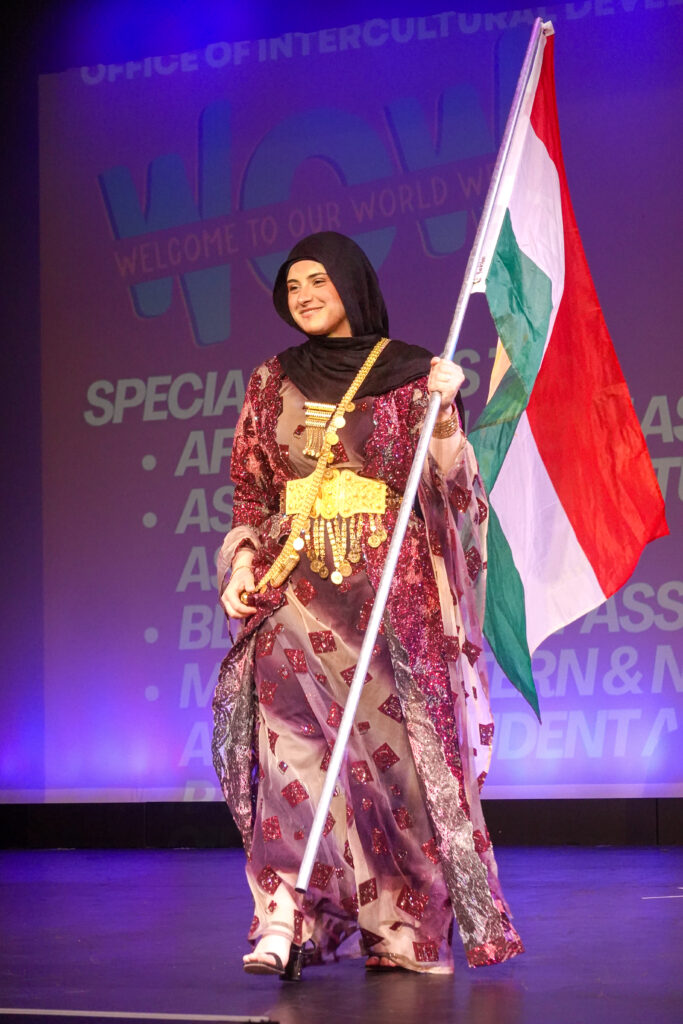
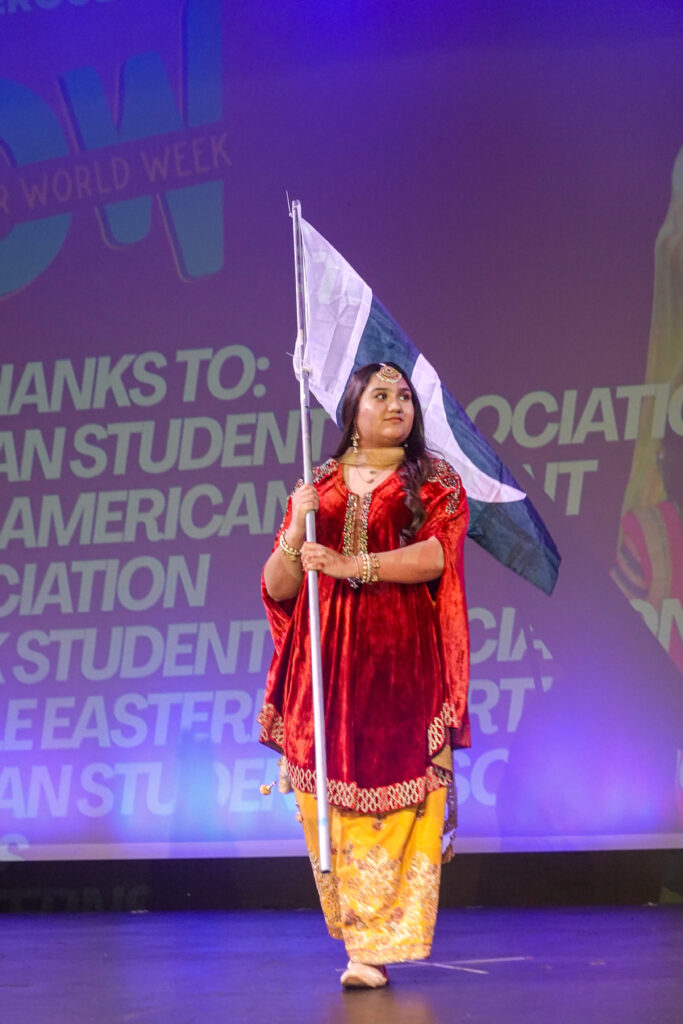
The program began with students from Kurdistan and Pakistan, who wore clothing featuring hand embroidery, silk and chiffon. As music from their countries played, the models sang along and struck a pose.
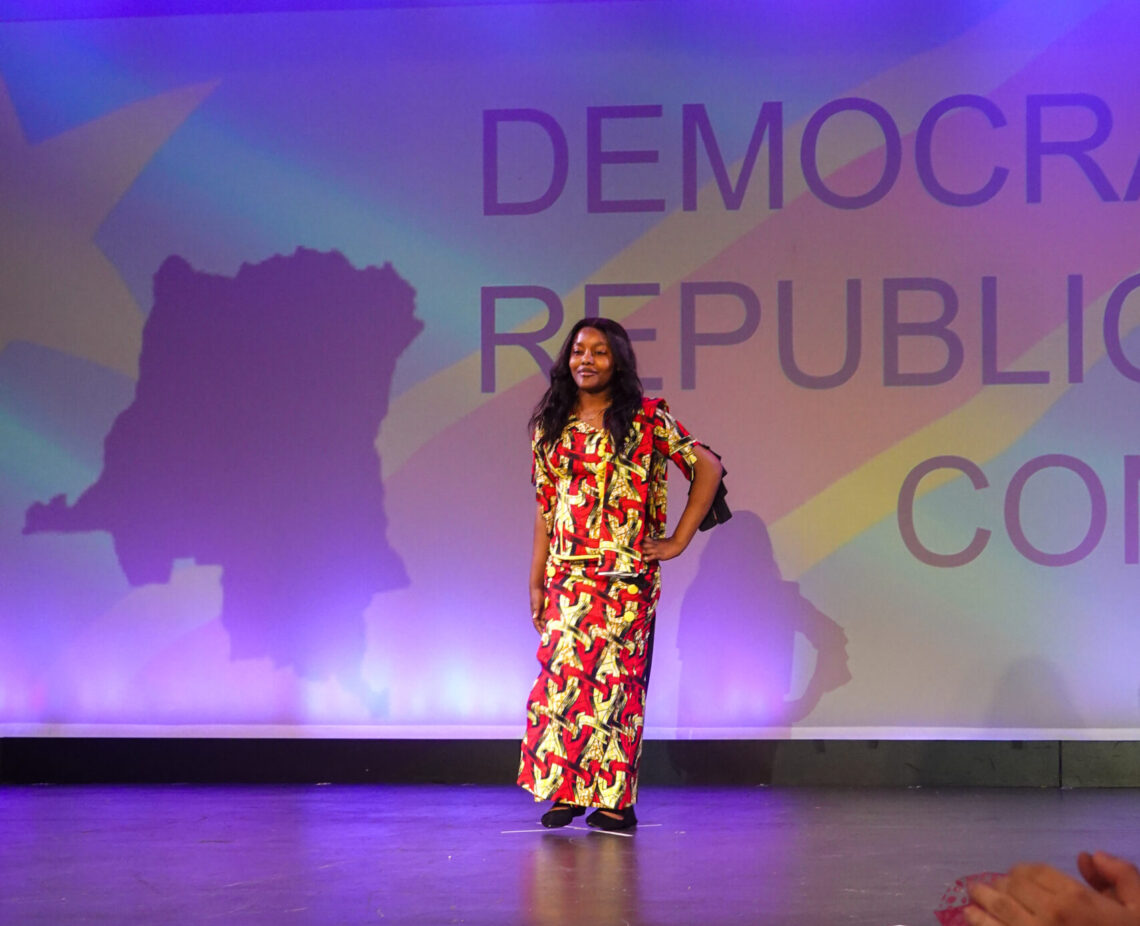
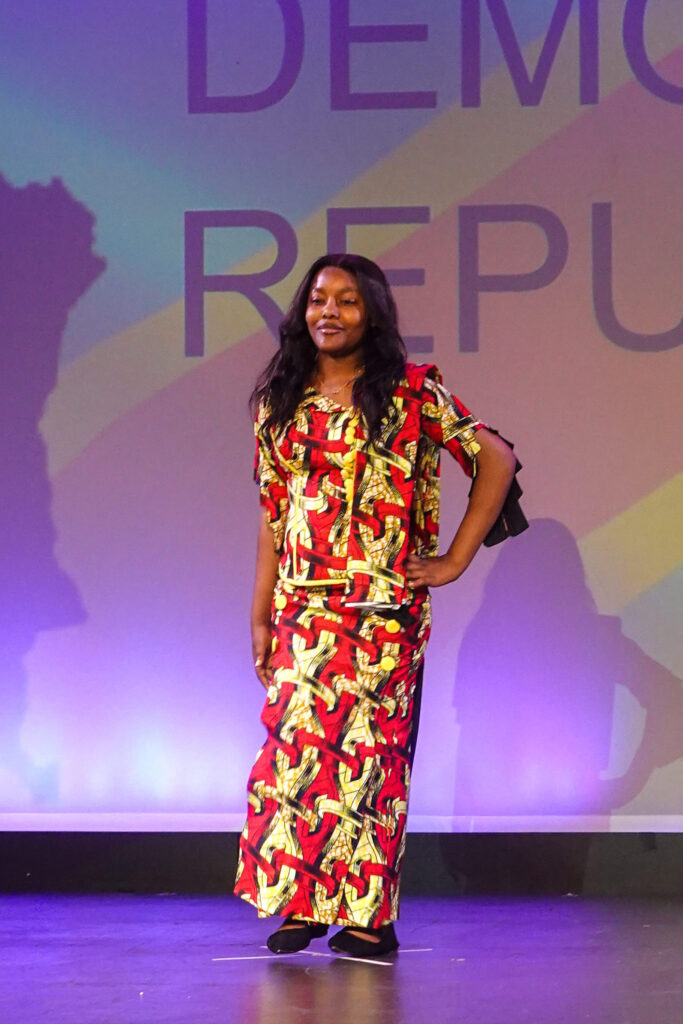
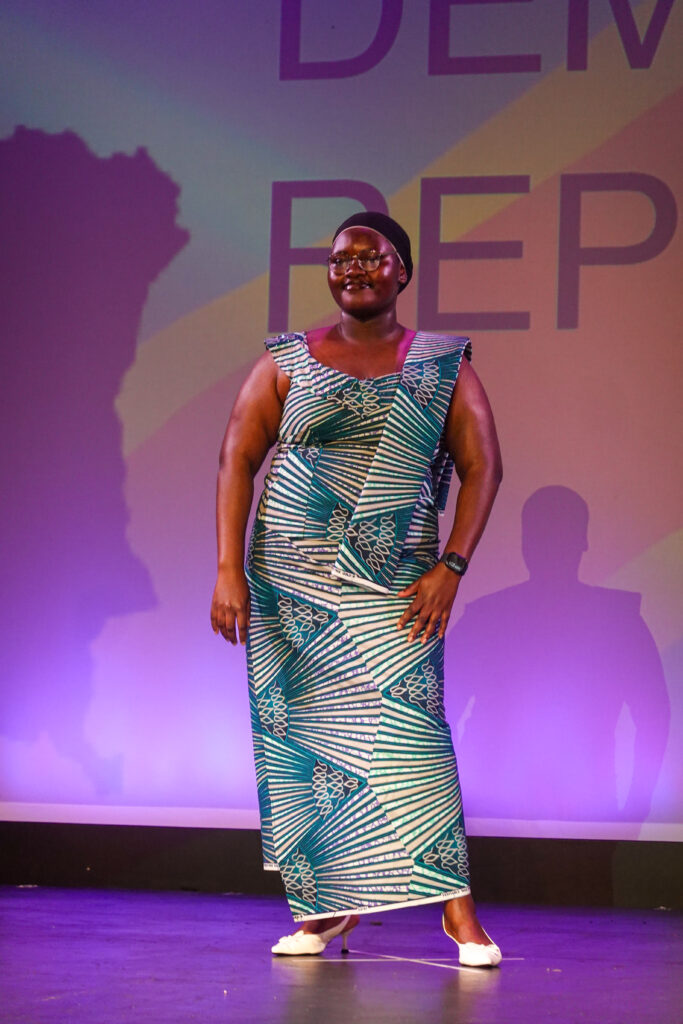
Next, two different models represented the Democratic Republic of the Congo (DRC). Both Francine Dorika and Nyota Etulo are freshmen, and they decided to sign up for the show after seeing flyers calling for models.
The girls’ outfits were completely different: Dorika wore a teal dress, while Etulo’s two-piece outfit was patterned red and yellow. Espinoza Lopez told the crowd that Congolese fashion reflects both personal style and community traditions.
Etulo’s outfit was shipped directly from the DRC, and she often wears it to a Congolese church which she attends in downtown Nashville on Sundays.
The DRC was followed by Ghana, Ethiopia, Somalia and Uganda. Espinoza and Julien shared a snapshot of each country’s culture and fashion; each outfit was unique, and the students walked to a song in their own language.
Nanakyen Dayit modeled for Nigeria, and she sewed her outfit herself. Her dress included a matching headband, which she made with fabric she brought from home.
“My freshman year I made four dresses … I made my dress the day of, because I was making everyone else’s,” Dayit recalled. “I had exams and tests, and I sewed in between, in any free time I had.”
Dayit said seeing everyone’s outfits was amazing, and she especially loved the Quinceañeras. “Look at that dress. I want one of those!” Dayit laughed.
After the African countries, Junior Caroline Tebbs took the stage for a live performance of one of her original songs. Then Central and South America took the stage.
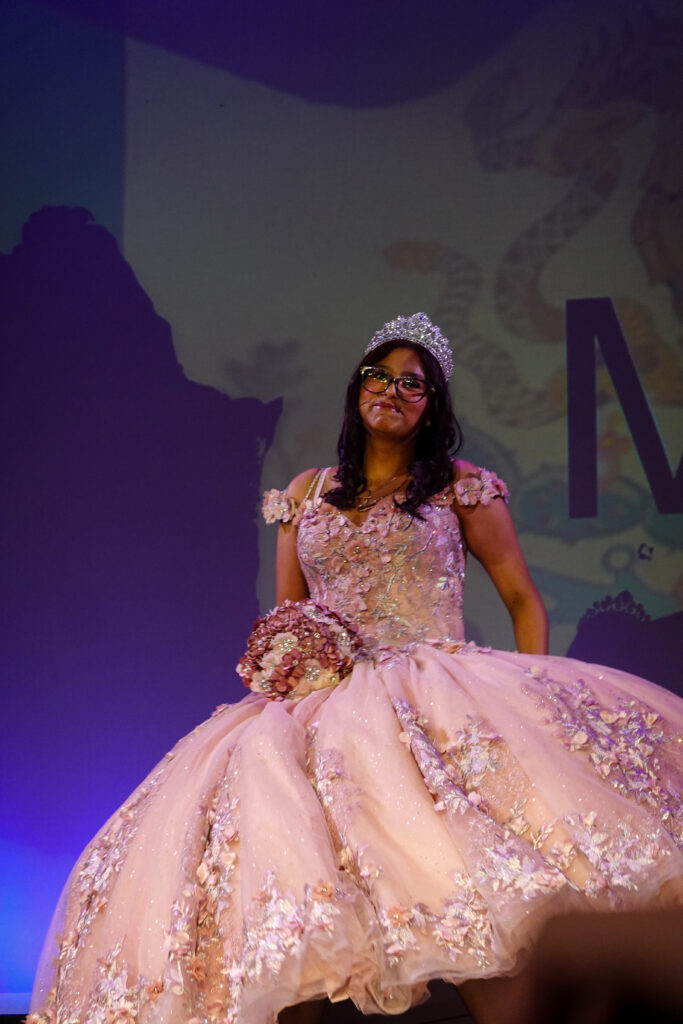
Mexico was a crowd favorite, especially when two of the four models showed off their Quinceañera dresses. Ashley Coreas, a freshman social work major, wore her dress from her traditional 15th birthday celebration. She represented the country of El Salvador, where her parents are from.
“I always knew I wanted pink,” Coreas said, smoothing down her elaborate dress. “That’s my favorite color, and I love flowers. My theme for my quinceañera was cherry blossoms.”
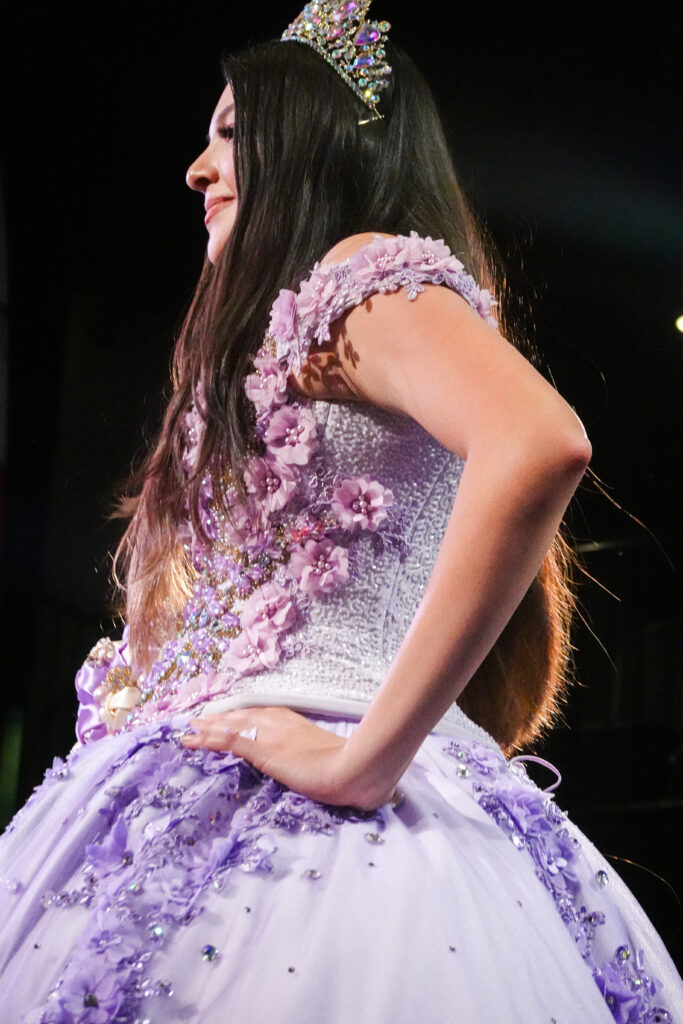
Coreas loved wearing her dress, but she was even happier to represent her country.
“El Salvador is a very small country, so being able to represent my people is very beautiful to me,” Coreas said. “A lot of girls aren’t able to have their quinceañera. So for me to represent, show out, and show that this is possible is very beautiful for me.”
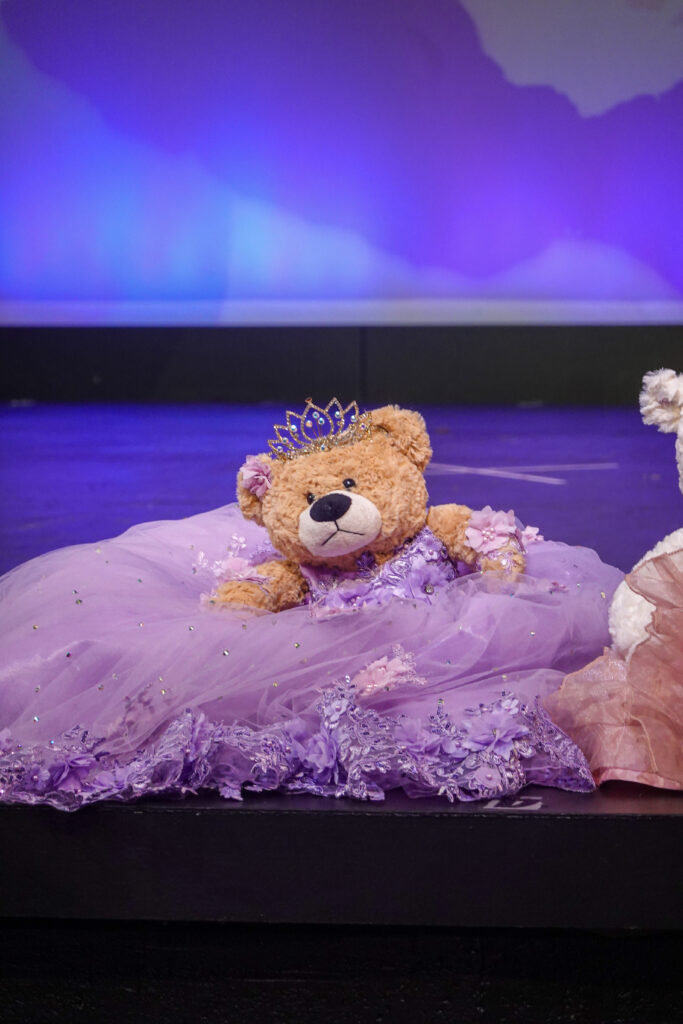
While Coreas walked the runway, her matching quinceañera teddy bear watched from the stage. As she floated into the curtains, a model for Peru stepped forward to show off his national team’s soccer jersey.
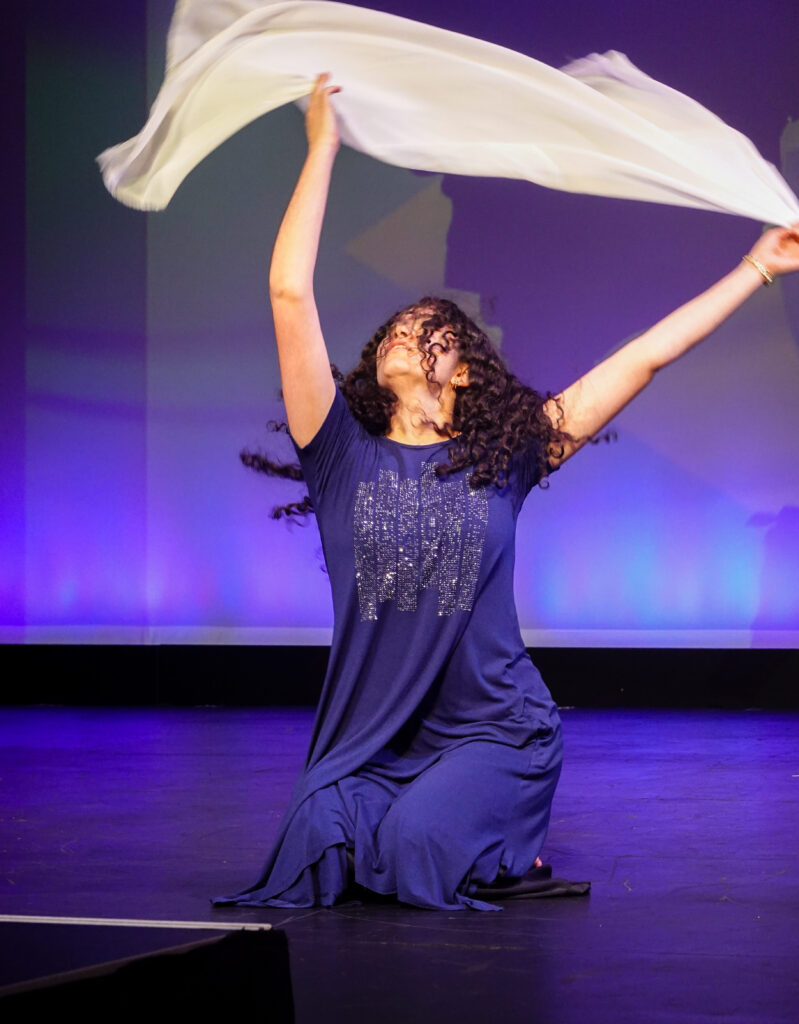
During Brazil’s portion of the show, Amanda Cruz demonstrated a praise dancing routine that the hosts said is common in more charismatic worship ceremonies. Cruz’s flowing tunic and white scarf beautifully complemented the Portuguese worship song.
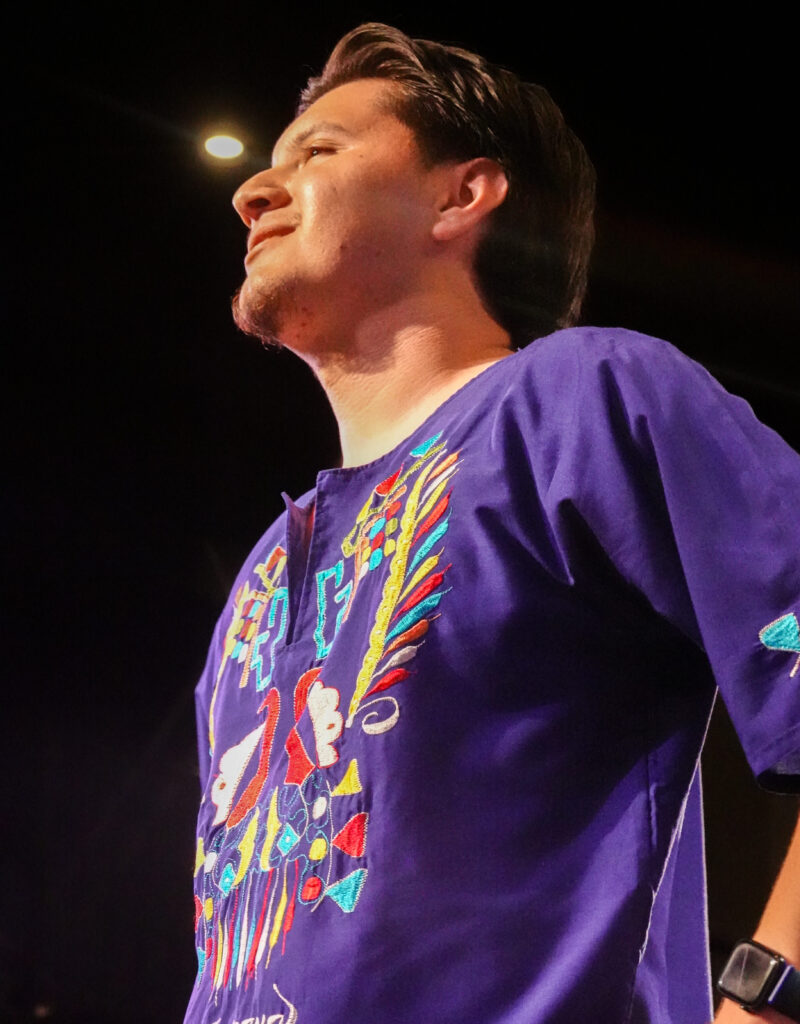
After Chile, Espinoza took the stage to represent Nicaragua. Julien told audiences that Nicaragua is known for its “alegria,” or pure joy. Espinoza’s colorful clothes mirrored the country’s lively spirit.
Espinoza returned to the role of host to introduce Honduras, whose clothing represents a blend of indigenous, African and Spanish cultures. Then Costa Rica, the second-to-last country, walked the runway.
“It is amazing how much history and culture a single item of clothing can carry,” Julien remarked.
After 18 countries, the audience was ready for the grand finale: the Philippines. Ten different models showed off a variety of stunning styles, which blended Chinese, Spanish and American fashion traditions into something uniquely Filipino.
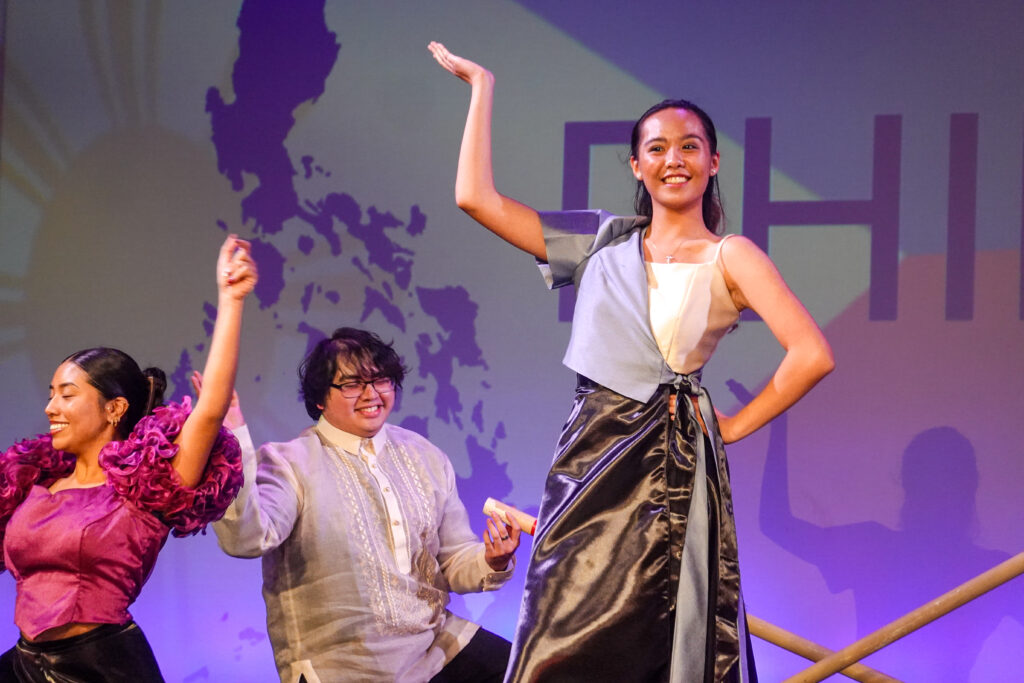
The crowd cheered for each look, which included silky dresses, embroidered shirts, lacy white skirts and sparkly sets. Then, juniors Marielle Guarin and Mychaela James sang a beautiful Filipino song.
The energy climbed again when the models brought out four long bamboo poles to dance the tinikling, a traditional folk dance in Southeast Asia. The dancers wove in and out of the poles to a traditional Filipino song, and then to a Bruno Mars hit.
As the music stopped and the Filipino models took a final bow, each of the models walked to the end of the runway with their own country’s flag.
“We hope this evening helped everyone see and celebrate the beauty of cultures from around the world,” Espinoza said.
Feature photo courtesy of Tess Clarkson.

Arlie Akers
Arlie is a junior English and International Relations double major. An aspiring journalist, she is passionate about telling stories that foster connection. She loves running, traveling, reading, and Indy, her golden retriever.