

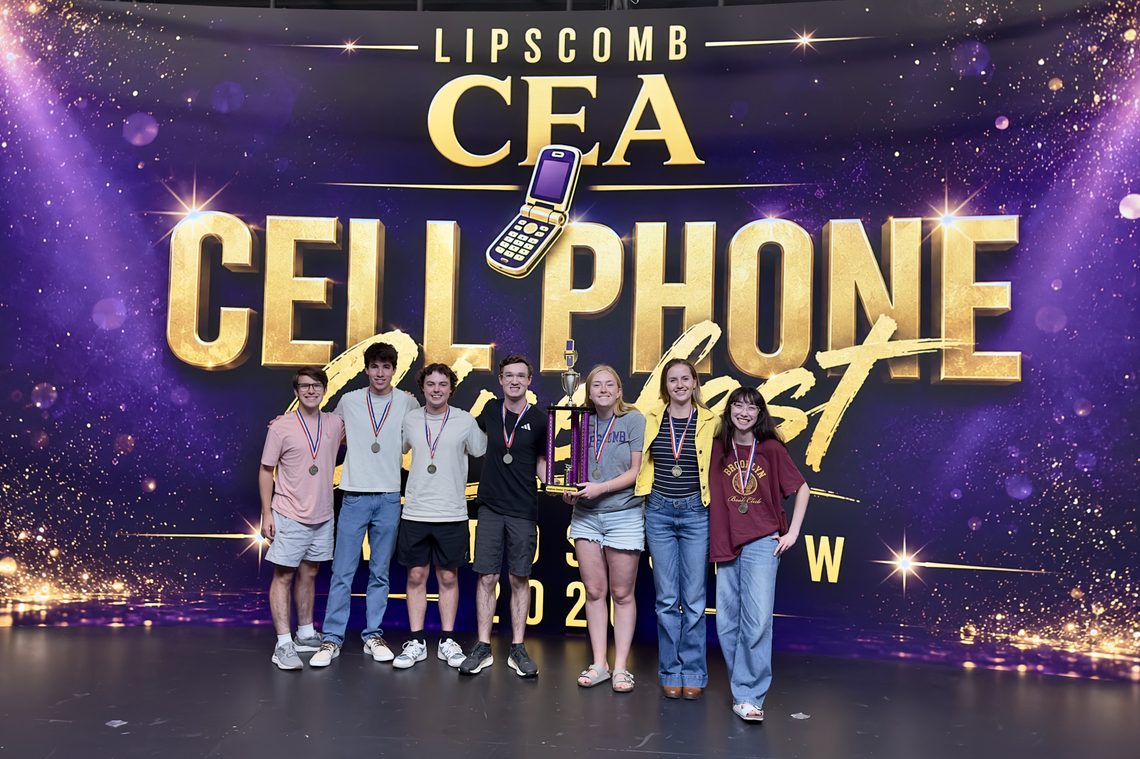
Cellphone Cinefest unites College of Entertainment and the Arts
Twenty-five years ago, the 48 Hour Film Project started in Washington, D.C. The premise is simple: Contestants have 48 hours to write, shoot and edit their own short film. Since its inception, the competition has expanded to more than 100 cities, including Nashville.
Seeing how successful the initiative has become, Lipscomb University’s Department of Cinematic Arts has joined in and created its own form of the competition, with unique twists.
The weekend of Aug. 21-23, Lipscomb film students participated in a 36-hour film challenge. Similar to the 48-hour version, students had limited time to write, shoot and edit their own short films. Students were placed in randomized groups made up of students of all ages and started Friday at 6 p.m., working until midnight the following day.
What truly separates Lipscomb’s version from the ones going on nationwide is one of the restrictions placed on how these films were made. Lipscomb students were restricted to using only the cameras on their cellphones. Because of this, the department named the new event the Cellphone Cinefest.
The Cellphone Cinefest comes to an end with an awards ceremony the day after films are submitted. Everyone involved gets together for a showing on the Volume Wall Studio on the second floor of the George Shinn Center. Films are played on a massive 13-by-24-foot screen, and awards are handed out to students.
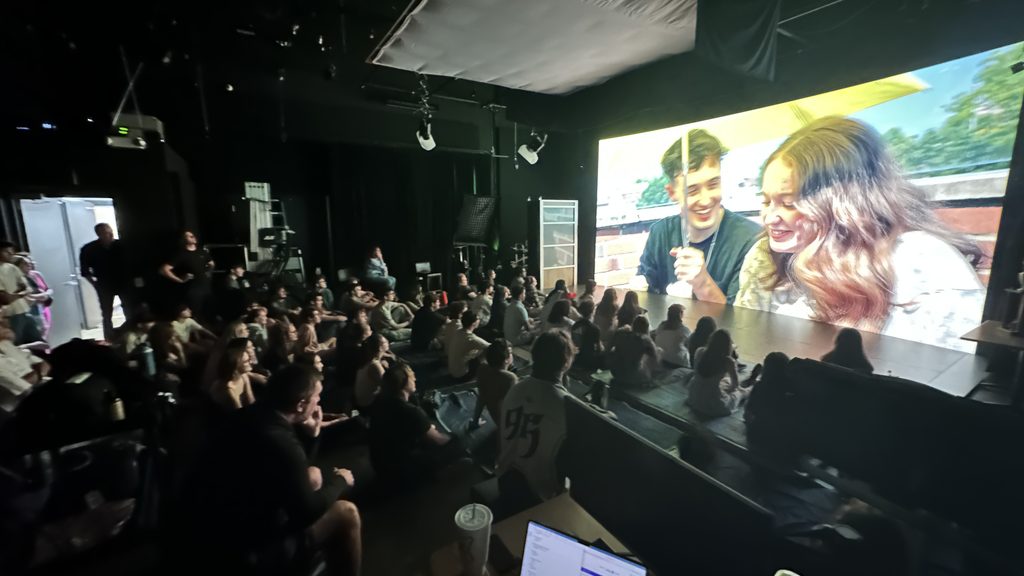
Awards include best audience choice, judges’ choice and best actor and actress.
While it is a competition, the intention is not for students to be overly competitive for a victory. Instead, the objective is to unite the department at the beginning of the school year. For Film Department Chair Matt Heusmann, it has been a success on that end. To him, there’s a day-and-night difference between student interaction before and after the event.
“There was enough time where we noticed where they were in class, had other professors talk about what it was like with them all in class before that weekend event and then after. And it was such a noticeable change in terms of them all, just the liveliness and them all knowing each other.”
To Heusmann, the connection needed to go beyond uniting the film department. In order to get more actors, the film department reaches out to the theater department. The collaboration between film and theater made it so that around 50 students total worked on the productions, uniting a large portion of the College of Entertainment and the Arts.
“The more we integrate all of our departments together, it’s a win,” Heusmann said.
Bringing together the different departments also serves as warm up for film department’s the biggest event. Students work all year to get to the 5 Minute Film Fest, which is a culmination of all they’ve learned. The increased time of this even allows for the fashion and music department to get involved.
The theater department seems to have struck gold with this new addition to its event calendar. To the heads of the film department, it’s an evident — the Cellphone Cinefest is here to stay.