
Dr. Johnson and “The Genius of the American Founding”
America is turning 250 this year, celebrating her semiquincentennial. The word itself is a mouthful, but the country is celebrating her liberty, alongside her birthday.
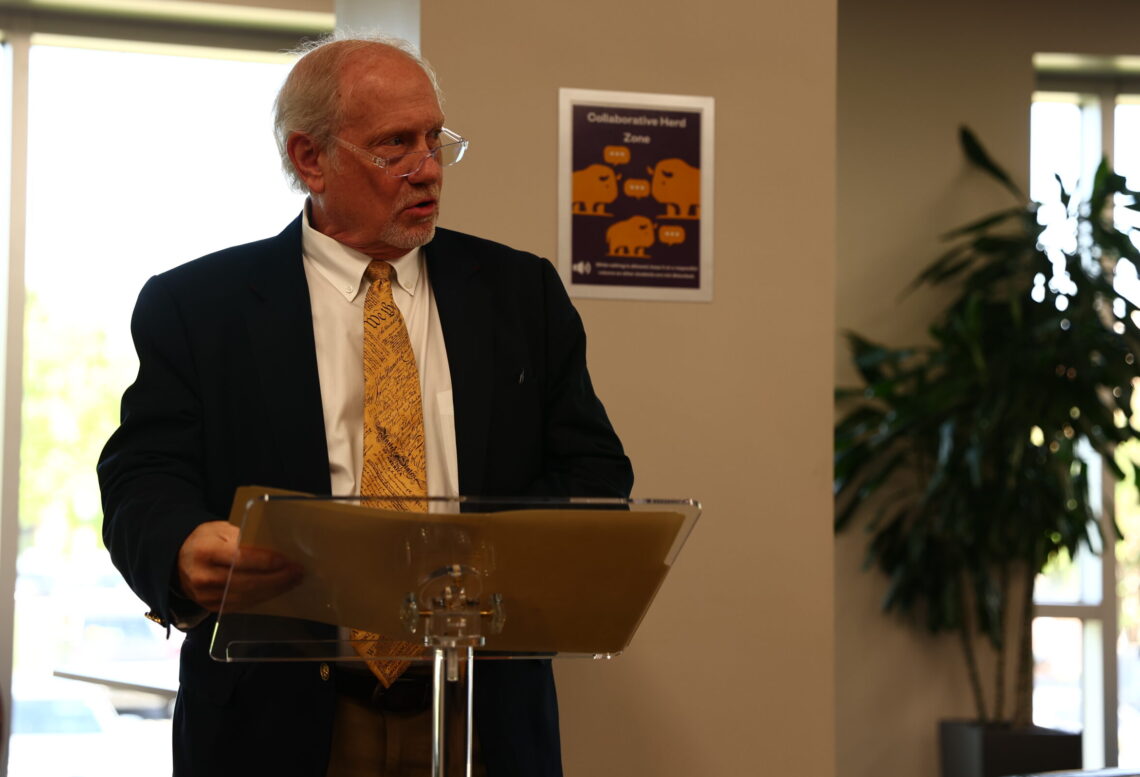
Dr. Tim Johnson has taught history at Lipscomb for 35 years. To close out his final semester with Lipscomb, Johnson gave a speech at Beaman Library’s event honoring America’s 250th anniversary. The topic of his speech? How America’s Founders created something, with the Declaration of Independence, that was powerful, unique and creative, and deserves to be honored and studied to this day.
“We tend to look at great events of the past as if they were inevitable,” Johnson explained. “It seems obvious that the colonists would win the Revolution and the Founders’ dream of a new nation would be the obvious result. But it was not inevitable. In fact, it was improbable.”
Looking back on the Founders from a 250 year distance, Johnson said that we often pay more attention to what the Founding Fathers did wrong, instead of what they did right.
“We have tended of late to focus myopically on their failings and forget what they accomplished. Their shortcomings do not diminish the genius of what they created 250 years ago. We should not forget that, nor should we forget that we have been privileged to live in and to benefit from the product of their labor,” Johnson said.
Johnson called the birth of America a combination of creativity and imagination. Perhaps now, that sounds like a stretch, but he explained why it was truly novel for the time.
The Founding Fathers were men who knew history, politics and philosophy. They had read many of the great Enlightenment writers at the time, and all of them possessed a solid, classical education. Each one of the men, Johnson said, had been taught not what to think, but rather how to think. In addition, their ideas about how society and government should interact with one another, and be structured, would change politics and the world forever.
“These colonists drank deeply from the outpouring of Enlightenment thought that had flowed from the pens of political philosophers of the previous century. Through their reading they were intimately familiar with the idea of a social contract – that implicit agreement between the government and the governed is reciprocal. Individuals will submit to the authority of government, and in return, government will maintain order without usurping its authority,” Johnson explained.
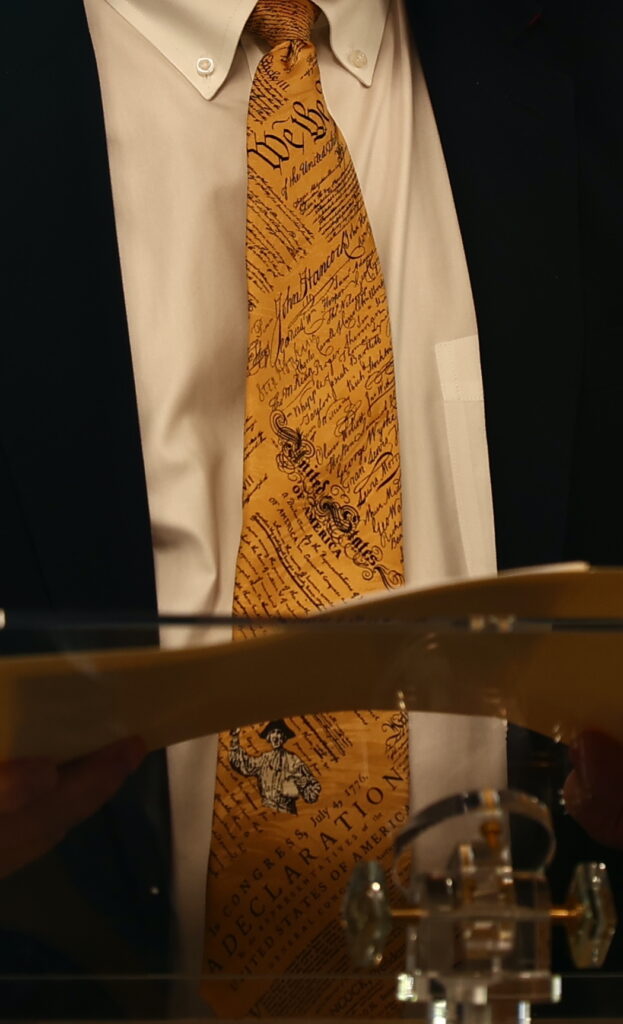

The Founding Fathers also believed that humans possessed natural rights. “Liberties are not the grants of King and Parliament,” said John Adams.
As England began to oppress more and more of the colonists’ natural rights, the decision was eventually reached that they’d had enough.
“250 years ago, our Founding Fathers were grappling with their long-running dispute with the Mother Country, and their solution was to declare their independence and start over. Thus began the American Experiment,” said Johnson. “Winning the Revolution afforded that first generation of Americans an uncommon opportunity to fashion a completely new government. It was a rare meeting of literature and politics as they sought to forge a new government based on what they had read, what they knew about history and what their personal experience had taught them.”
Though the start may have been imperfect, its result was the oldest written Constitution in the world, and the shortest.
The Founders strove to divide governmental power so that something might always hold it in check. They created the Constitution as a wall to help with that checking, even amongst the divided branches.
Patrick Henry said that, “The Constitution is not an instrument for the government to restrain the people, it is an instrument for the people to restrain the government.”
The Founding Fathers also created a system that allowed for individual states to coexist within the greater body of the union. According to Johnson, at the time the Constitution was written, accepted wisdom considered such a system to be impossible.
In fact, nearly everything that the Founders set up for the young country was considered improbable at the time, if not downright impossible, Johnson said. Looking back on that today, the outcome seems to be a given, but for them it required an extreme balancing act of wits, knowledge and the willingness to challenge accepted norms.
“Renowned Constitutional historian Forrest McDonald said in a graduate seminar [I was in] that you could not find 55 people today whose collective intelligence and wisdom would rise to the level of the 55 Framers of the Constitution. I did not believe it when he said it, but 40 years later, I wonder…,” Johnson said, trailing off with a chuckle.
Though the country is celebrating her 250th birthday this year, Johnson called for the American people to remain self-disciplined. He explained that often, it is the countries who are undisciplined that circle through the cycle of tyranny, revolt, liberty, abuse of that liberty, and then tyranny again.
Johnson shared how at the close of the Constitutional Convention in 1787, it is said that a woman approached Benjamin Franklin and asked, “What have you given us?” His response, Johnson said, is important even today: “A republic, if you can keep it.”
There is much to celebrate this summer, Johnson said. Our forefathers pulled off what many considered to be impossible. They stood up to the greatest imperial power at the time and won. They went from being the underdogs in the fight to the men creating a nation devoted to liberty and equality, from scratch.
“250 years ago when 56 men signed the Declaration of Independence, they risked their lives, their fortunes and their sacred honor. The outcome of that pivotal event now seems so obvious. It was inevitable that they would succeed and that what they created would endure for 250 years. And that is part of their greatness; they made the improbable seem inevitable,” Johnson said.
But the question is, can we keep it?