
2025 and then: Family of first Black Lipscomb student remembers his story, honors his legacy
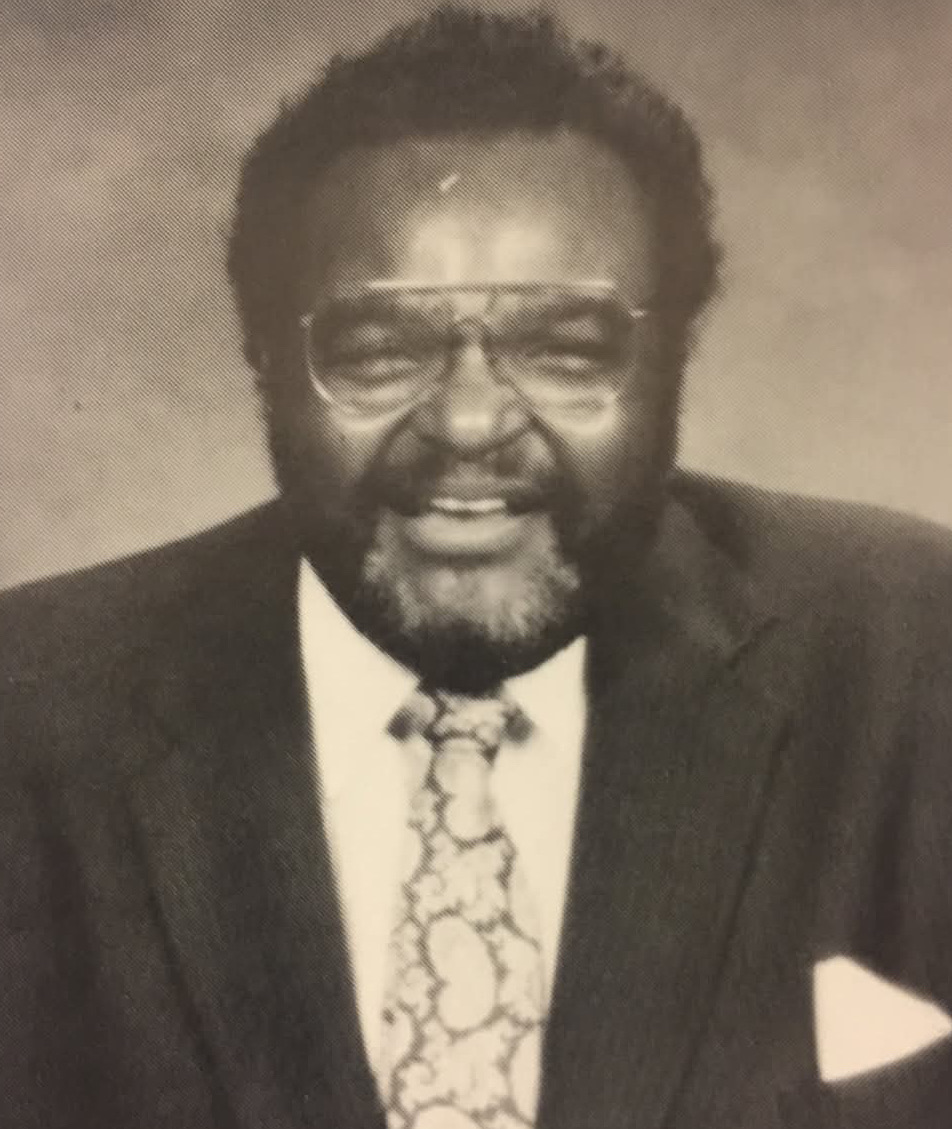
The year 2025 has marked 60 years since James Fitzgerald, Lipscomb’s first Black student, enrolled at the university.
To honor this anniversary, Fitzgerald’s family reflected on his personal history, legacy and the importance of this milestone.
Fitzgerald enrolled at Lipscomb University, then David Lipscomb College, in 1965. He came to the school to study the Bible and enhance his work as a preacher.
However, it was not always a given that Fitzgerald would have the opportunity to attend college.
Fitzgerald was born in Thompson Station, Tennessee, during the Jim Crow era. Like many other African Americans in the South, Fitzgerald had limited access to educational resources.
While white students had an abundance of private and public schools to choose from, Black students had fewer options. Often, Black schools faced severe underfunding.
Many Black teenagers and young adults were unable to attend high school. Even fewer enrolled in college.
Unable to receive a complete education, Fitzgerald joined the Marines.
“[The Fitzgerald Family] was poor even to the poor people,” said Todd Fitzgerald, son of James Fitzgerald. “He did not have his high school diploma. He got out of the Marines and got on the GI Bill and went to the Nashville Christian Institute.”
Nashville Christian Institute (NCI) was a Black, Christian preparatory school in Tennessee. Founded by A. M. Burton and Marshall Keeble, the school focused on helping adults receive or complete their secondary education.
NCI was a distinctly Christian school. Students actively engaged with ministerial work. Fitzgerald was no different.
“Marshall Keeble would teach young men how to preach in rural areas,” Fitzgerald’s son said. “[James Fitzgerald] went to places like Centerville, Tennessee. Believe it or not, Mount Juliet, over where Providence [Marketplace] is, that was rural.”
Influenced by his time at NCI, Fitzgerald decided to pursue an education in preaching and biblical studies. This decision became his entryway into Lipscomb University.
“Marshall Keeble came to A. M. Burton and asked him, ‘Why is it that Black students cannot go to David Lipscomb?’ The American Baptist Seminary, my father was going to go there [instead],” Todd Fitzgerald said. “[Keeble] said, ‘Wait a minute, let’s see if you can go to David Lipscomb.’ So Marshall Keeble got with A. M. Burton and asked the faculty why is it that he [Fitzgerald] couldn’t go to David Lipscomb. So they met and sat down, and eventually they did let him go.”
Due to Keeble’s advocacy and mounting pressure from the civil rights movement, Lipscomb allowed Fitzgerald to enroll.
Fitzgerald wasn’t a traditional student. By the time he arrived at David Lipscomb College, he was a veteran, a preacher and, most importantly, a husband and a father. He also worked full-time for the Louisville and Nashville (L&N) Railroad.
These factors made his college experience drastically different from that of his peers.
Being Lipscomb’s first Black student wasn’t only about skin color, hair texture or cultural differences. Systemic disparities defined the experience and prevented Fitzgerald from accessing traditional college life.
“I cannot imagine the social, emotional and financial responsibility that he had to hold in that time, in that era,” said Tasha Fitzgerald, James Fitzgerald’s granddaughter. “Think of how much anxiety, how many mental health issues, how much of a burden Black American men have. No one gives Black American men a break, and no one takes their mental health seriously. To have the weight of the entire family, in a time period where you don’t even have basic human rights, and then to have to be a dad, a husband, a well-oiled machine.”
Fitzgerald’s circumstances as a nontraditional student brought him unique challenges.
“I remember he bought a typewriter and we [his children] would want to type,” Todd Fitzgerald said. “He was in college, and we were climbing over [him] and playing, and he was trying to do his work.”
These personal challenges existed against the backdrop of longstanding and pervasive racial tensions in the South.
“It was a very scary time because all you saw on TV was rioting,” Fitzgerald said. “That’s all you heard and all you saw on TV, and then in town, you couldn’t go anywhere. You heard a lot of sirens and chaos.”
Lipscomb was not immune to these tensions. Dr. Robert Hooper, one of James Fitzgerald’s professors, acknowledged and addressed these issues.
“Dr. Hooper – I remember when he came to speak,” Todd Fitzgerald said. “He said when Bruce Bowers, a great basketball player, would play – in the stands they would call him a n—–. When he spoke [publicly], Dr. Hooper would bring that up.”
Racially motivated pushback affected James Fitzgerald’s time as a Lipscomb student both on and off campus.
Upon enrolling at Lipscomb, Fitzgerald moved his family closer to the school. There, he faced heightened discrimination.
“When we moved into that neighborhood over near Lipscomb, it was two weeks before I could come over. Things had to settle down,” said Todd Fitzgerald of the move.
James Fitzgerald was careful to guard his children from the racial discrimination surrounding them while he attended Lipscomb.
“Of course, you have to understand that this was the 60s. He had to do a great job of keeping his kids from the racism. That had to be a job to do itself,” Todd Fitzgerald said. “I might’ve been 7, 8. So, a lot of things I just didn’t understand that I understand now.”
To help him navigate these difficulties, Fitzgerald relied on Lipscomb staff for support. Notably, he found mentors in his professors.
“One of the staff [members] he got a lot of support from was Dr. Hooper,” Todd Fitzgerald said. “His wife helped my mother get her GED. They were fantastic people.”
Despite challenges, Fitzgerald appreciated his time at Lipscomb. His professors and classes went on to shape how he preached.
“It taught him the Bible – just the Bible. [He studied] under [Batsell] Barrett Baxter, Jim Bill McInteer. I got some old books [from them] that I still have and preach out of,” said Todd Fitzgerald, who followed in his father’s footsteps and became a preacher.
After leaving Lipscomb, James Fitzgerald continued his career as a preacher and remained with the L&N Railroad until his retirement.
Despite the hardships James Fitzgerald faced, he remained firm in his Christian faith and character. His spirit leaves a mark on his loved ones to this day.
“He was, overall, a really, really good man at the core,” said Typhanee Fitzgerald, another granddaughter. “He was a great example of what it was like to be a Christian. He was very family-oriented. He was very loving.”
Tasha Fitzgerald remembers her grandfather in the same joyful light: “He was just happy. He was the fun grandad, even with all the things going on in the world. He was always so calm, cool and collected. He did a lot of firsts for not having a lot of education.”
James Fitzgerald’s struggles as Lipscomb’s first Black student weren’t in vain. Following his enrollment, other Black students followed. This included Harry Kellam, Lipscomb’s first Black graduate.
Today, roughly 9% of Lipscomb’s student body identifies as Black, whether they’re of African American, African or Caribbean descent. Lipscomb’s Black student presence would not be possible without Fitzgerald.
“He’s an unsung hero,” Todd Fitzgerald said. “Someone had to fight to get in there. Somebody had to break the ice. And it was a serious struggle. Not to know anything about him – it’s a shame.”
Despite Fitzgerald’s legacy as a trailblazer for the Lipscomb community, it’s difficult to find anything about him on campus. There are no halls, offices or scholarships named after him. There is no plaque with his name to recognize his achievement.
The Fitzgerald family hopes to see this change.
“I’ve always thought that something should’ve been done. Something should’ve been named after him,” Todd Fitzgerald said. “For him to be a father, a preacher and just to attend, to go through that at that time.”
Joe Fitzgerald, the great-nephew of James Fitzgerald, expressed his hope that Lipscomb will step up to create this change.
“I’m curious about bolstering the narrative, and what that looks like from Lipscomb’s side,” he said. “It’s really sickening that there are no artifacts.”
Although Fitzgerald’s legacy isn’t currently honored by the university, it is remembered and cherished by those who knew him.
“He was a trailblazer,” Typhanee Fitzgerald said. “He walked in spaces that no one else could. And, you know, he created a space where people would have a future, and he made history.”

Chrissy Julien
Chrissy Julien is a junior Journalism and French double major from Nashville, Tennessee.