This fall, pictures of a new face appeared on cafeteria napkin dispensers.
Tara Parsons joined the dining team as a district campus dietitian for Sodexo, Lipscomb’s dining service, in July. With a Master of Science in nutrition, along with the credentials of registered dietitian nutritionist and licensed dietitian, Parsons is qualified to serve not only Lipscomb students but also students at Trevecca, Fisk, UT Martin and Lee universities.
The Nashville Vibe, the newest addition to the UPSHOT league, announced Yolanda Moore as the team’s first head coach on Wednesday, Oct. 7, in a press conference at the Nashville Vibe offices. The UPSHOT League is a professional independent women’s basketball league that launched with four teams in 2026. The Jacksonville Waves, Savannah Steel, Greensboro Groove, and the first ever UPSHOT League champions, the Charlotte Crown. Nashville was officially awarded its expansion franchise by the UPSHOT League on April 9, 2026, and they now have a head coach with much anticipation ahead of the team’s first season. “We are building this team around three commitments: Joy, belonging, and basketball excellence,” Nancy VanReese, president and CEO of the Nashville Vibe, said. For a city like Nashville that just missed out on being a WNBA expansion franchise, there can be obstacles in the way to in order to bring excitement that a WNBA team would, without actually having one. “Joy is the excitement of a close game… belonging means when you come to a Nashville Vibe game, you know you have a place there… and basketball excellence is the standard that we will give and guide,” VanReese said. The Deputy Commissioner of the UPSHOT League, Taj McWilliams-Franklin was next to the podium. A 15-year WNBA legend, a Hall of Famer, and the all-time offensive rebounds leader when she retired, McWilliams has ties to Moore. Both women were a part of the inaugural Orlando Miracle roster in 1999, and McWilliams-Franklin had nothing but praise for her former teammate and longtime friend. “She’s experienced this game at the highest level and spent years coaching, mentoring, and pouring in[to] others,” McWilliams-Franklin said. “She’ll allow her players to grow, to compete, but she’ll challenge them to be better on and off the court.” The UPSHOT League prides itself on giving the players who may not have been drafted to the WNBA that second chance that can spark something special. Nashville Vibe Head Coach Yolanda Moore shared her experience in this game and how she can relate to her players in that aspect. “I know what it’s like to go from being a superstar in college, to sitting down by the cooler at the end of the bench,” Coach Moore said. “There are so many players who haven’t gotten an opportunity at the professional level, and this gives them an opportunity.” Moore brings about as much experience as you could draw up for a brand new franchise. Her playing career brought three all-conference selections for the University of Mississippi, and was inducted to the Ole Miss Sports Hall of Fame in 2010. She adds two WNBA championship rings to the resume, both with the Houston Comets. Her coaching experience brings stints at the high school level, and more notably the college ranks, where she led LSU Eunice women’s basketball to a 26-3 record in just one season at the helm of the Lady Bengals. In that season, she led the team to its first-ever regular season conference title, and was named the 2013-2014 NJCAA Region 23 Coach of the Year. VanReese was asked about the process of hiring a coach and how Moore was ultimately the final decision. She replied, “We did interview a handful of candidates. We were so overwhelmed with joy to find out that Yo[landa] was gonna be available that we leaned in as hard and as fast as we could.” The inaugural season for the Vibe is set to begin sometime in late May and run through late August, according to VanReese. She also shared that the home games will be played in the historic Memorial Gymnasium at Vanderbilt University. For information about upcoming games, season tickets, and the UPSHOT League, visit nashvillevibe.com to learn more. “I didn’t know that this is where I needed to be, but now that I’m here, I wouldn’t want to be any place else,” Moore said. “I am excited about what we are building and I’m ready to get started, so it’s up from here.” Featured Image taken by Will Blackmon
Last Wednesday, September 30, the familiar outdoor bricks of Bison Square traded textbooks for syringes for the annual Bison Flu Fest. Running from 9 a.m. to 4 p.m., the blitz was a major success, administering 316 total doses to the Lipscomb and local community. The massive healthcare initiative was a coordinated effort between Lipscomb University Health Services and the College of Pharmacy’s student chapter of the American Pharmacists Association-Academy of Student Pharmacists (APhA-ASP). A Successful Leap to the Square While the university has historically utilized indoor venues like Allen Arena to protect against unpredictable weather, this year marked a strategic shift to the outdoors. On a beautiful autumn day, organizers set up clinical tents directly in the high-traffic center of campus to maximize visibility and lower the barrier to preventative care. “This was our first year to hold Bison Flu Fest outside and I do believe it was successful,” said Dr. Sarah Uroza, associate professor of pharmacy practice at Lipscomb. “Allen Arena is a good location for the space and in case of heat, cold, or rain, but on a beautiful day like yesterday, holding it in the square was great.” Dr. Uroza noted that the outdoor setting naturally drove casual walk-up participation. “Being in the middle of campus, you caught people who might have forgotten about the event or didn’t even know it was happening,” she explained. “There were many people that just stopped on their way to class or to the student center.” For the student pharmacists on the ground, the day was all about community protection. “We’re just kind of getting everyone to get their flu shot today,” said Rylee Morrison, a second year (P2) pharmacy student volunteering at the event. Morrison energized the effort, noting that the push was vital for “kind of [spreading] awareness of how important flu shots are, especially in the high season of respiratory season.” Real-World Training for Future Pharmacists Beyond safeguarding campus health, the event served as a critical experiential learning environment for Lipscomb’s pharmacy student volunteers. According to Dr. Uroza, students learn about immunizations and earn their vaccination certifications during their very first week of pharmacy school. “When they give flu shots or other vaccines on their rotations or during events like Bison Flu Fest, it gets them comfortable giving vaccines,” Dr. Uroza said. “During that first one in class they are extremely nervous, but when you get out in the real world and start giving vaccines you get much more comfortable.” The fast-paced clinic also exposed students to practical patient-care challenges and real-life scenarios—including managing patient nerves. Morrison experienced this firsthand on the square. “It’s not that bad. It’s just, it feels like a little, little prick, nothing too bad,” Morrison shared, adding a relatable lighthearted moment from the clinic: “I literally just gave one to my boyfriend, and he was, like, kind of scared that it was gonna hurt.” Operating the clinic on campus provided a supportive safety net for these developing practitioners. “The good part of doing these on campus is those students newer to giving vaccines feel comfortable in an environment they are familiar with,” Uroza noted. Predicting the Strains: How the Vaccine Works A major point of education during the event was how the flu vaccine changes from year to year. a first year (P1) Pharmacy student Devin Harvey explained that the annual formulation is a highly calculated scientific effort. “It’s made each year… it’s more of a…prediction for which…more prevalent each year,” Harvey explained. “And so… it’s supposed to be against the strains that are supposed to be big that year.” Harvey noted that while public health organizations are tracking a moving target, the science remains robust. “It’s not always correct. Sometimes, you know, they guess wrong, but a majority of the time, they are pretty accurate,” Harvey added. Dr. Uroza built upon this, explaining the immunology behind that formulation. “For anyone that has studied immunology, the vaccine is an antigen which triggers the body to develop antibodies against it,” she said. “Once the body develops these antibodies, if the antigen is introduced to the body again—meaning the person gets exposed to the flu—those antibodies go and attack the antigen and kill it before it can affect the person.” She also firmly addressed a persistent piece of medical misinformation that often deters individuals from getting vaccinated. “Many people will claim that the flu shot can give you the flu. That is false,” Dr. Uroza emphasized. “The flu shot actually protects you from getting the flu in the future, but they may be calling these mild flu-like symptoms ‘the flu,’ which is incorrect and gives the flu shot a bad rap.” Accessibility and Post-Shot Availability A major draw for this year’s Flu Fest was the total elimination of financial barriers for the campus community. “Well, here, it’s free,” Morrison pointed out, contrasting the campus event with off-campus alternatives. “Depending on if you go to, like, Walgreens or Kroger’s…you might… have to pay through out of pocket or your insurance.” Health officials emphasize that late September is the ideal window for receiving the vaccine, ensuring optimal immune defenses are built before seasonal flu activity ticks upward in the late fall. For those who missed today’s main event, catch-up vaccinations remain available. The Lipscomb University Health Center continues to offer walk-in immunizations during standard business hours. Students can coordinate appointments or retrieve their updated vaccination records by contacting the clinic at 615-966-6304 or via email at healthservices@Lipscomb.edu. Featured Image courtesy of @aphalipscomb on Instagram


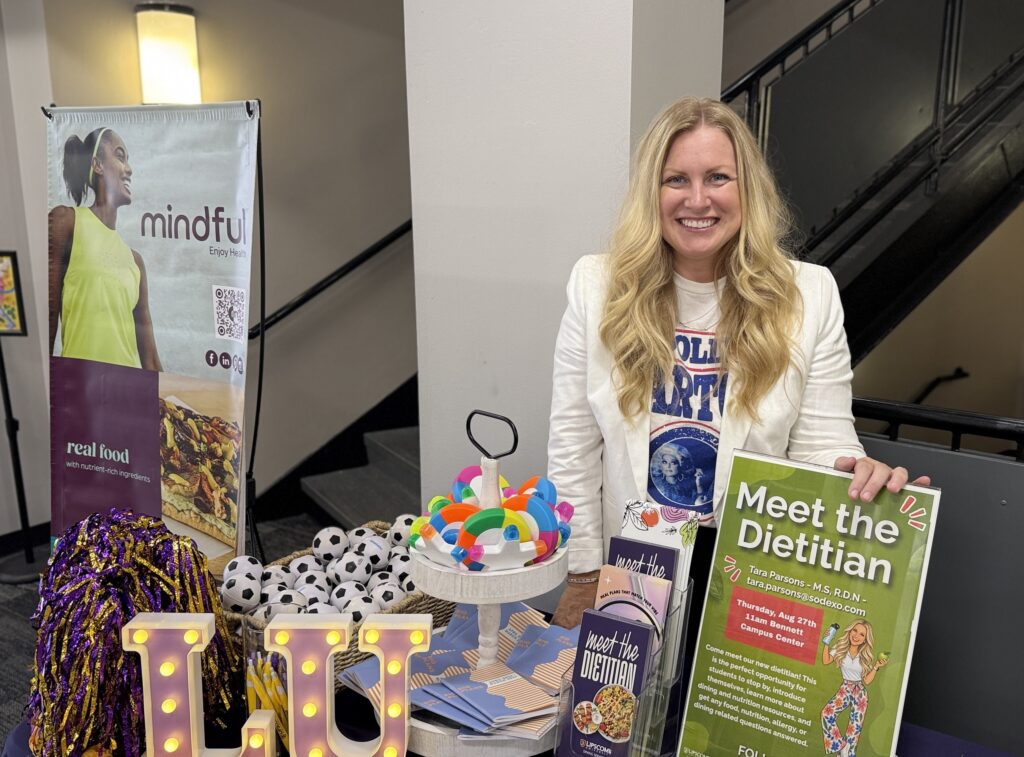 This fall, pictures of a new face appeared on cafeteria napkin dispensers. Tara Parsons joined the dining team as a district campus dietitian for Sodexo, Lipscomb’s dining service, in July. With a Master of Science in nutrition, along with the credentials of registered dietitian nutritionist and licensed dietitian, Parsons is qualified to serve not only Lipscomb students but also students at Trevecca, Fisk, UT Martin and Lee universities.
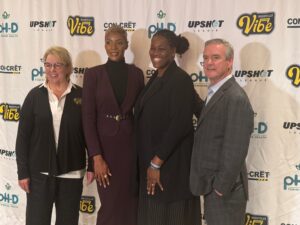 The Nashville Vibe, the newest addition to the UPSHOT league, announced Yolanda Moore as the team’s first head coach on Wednesday, Oct. 7, in a press conference at the Nashville Vibe offices. The UPSHOT League is a professional independent women’s basketball league that launched with four teams in 2026. The Jacksonville Waves, Savannah Steel, Greensboro Groove, and the first ever UPSHOT League champions, the Charlotte Crown. Nashville was officially awarded its expansion franchise by the UPSHOT League on April 9, 2026, and they now have a head coach with much anticipation ahead of the team’s first season. “We are building this team around three commitments: Joy, belonging, and basketball excellence,” Nancy VanReese, president and CEO of the Nashville Vibe, said. For a city like Nashville that just missed out on being a WNBA expansion franchise, there can be obstacles in the way to in order to bring excitement that a WNBA team would, without actually having one. “Joy is the excitement of a close game… belonging means when you come to a Nashville Vibe game, you know you have a place there… and basketball excellence is the standard that we will give and guide,” VanReese said. The Deputy Commissioner of the UPSHOT League, Taj McWilliams-Franklin was next to the podium. A 15-year WNBA legend, a Hall of Famer, and the all-time offensive rebounds leader when she retired, McWilliams has ties to Moore. Both women were a part of the inaugural Orlando Miracle roster in 1999, and McWilliams-Franklin had nothing but praise for her former teammate and longtime friend. “She’s experienced this game at the highest level and spent years coaching, mentoring, and pouring in[to] others,” McWilliams-Franklin said. “She’ll allow her players to grow, to compete, but she’ll challenge them to be better on and off the court.” The UPSHOT League prides itself on giving the players who may not have been drafted to the WNBA that second chance that can spark something special. Nashville Vibe Head Coach Yolanda Moore shared her experience in this game and how she can relate to her players in that aspect. “I know what it’s like to go from being a superstar in college, to sitting down by the cooler at the end of the bench,” Coach Moore said. “There are so many players who haven’t gotten an opportunity at the professional level, and this gives them an opportunity.” Moore brings about as much experience as you could draw up for a brand new franchise. Her playing career brought three all-conference selections for the University of Mississippi, and was inducted to the Ole Miss Sports Hall of Fame in 2010. She adds two WNBA championship rings to the resume, both with the Houston Comets. Her coaching experience brings stints at the high school level, and more notably the college ranks, where she led LSU Eunice women’s basketball to a 26-3 record in just one season at the helm of the Lady Bengals. In that season, she led the team to its first-ever regular season conference title, and was named the 2013-2014 NJCAA Region 23 Coach of the Year. VanReese was asked about the process of hiring a coach and how Moore was ultimately the final decision. She replied, “We did interview a handful of candidates. We were so overwhelmed with joy to find out that Yo[landa] was gonna be available that we leaned in as hard and as fast as we could.” The inaugural season for the Vibe is set to begin sometime in late May and run through late August, according to VanReese. She also shared that the home games will be played in the historic Memorial Gymnasium at Vanderbilt University. For information about upcoming games, season tickets, and the UPSHOT League, visit nashvillevibe.com to learn more. “I didn’t know that this is where I needed to be, but now that I’m here, I wouldn’t want to be any place else,” Moore said. “I am excited about what we are building and I’m ready to get started, so it’s up from here.” Featured Image taken by Will Blackmon
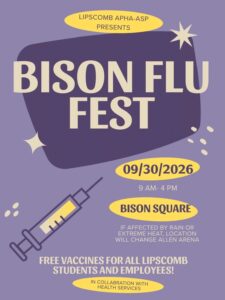 Last Wednesday, September 30, the familiar outdoor bricks of Bison Square traded textbooks for syringes for the annual Bison Flu Fest. Running from 9 a.m. to 4 p.m., the blitz was a major success, administering 316 total doses to the Lipscomb and local community. The massive healthcare initiative was a coordinated effort between Lipscomb University Health Services and the College of Pharmacy’s student chapter of the American Pharmacists Association-Academy of Student Pharmacists (APhA-ASP). A Successful Leap to the Square While the university has historically utilized indoor venues like Allen Arena to protect against unpredictable weather, this year marked a strategic shift to the outdoors. On a beautiful autumn day, organizers set up clinical tents directly in the high-traffic center of campus to maximize visibility and lower the barrier to preventative care. “This was our first year to hold Bison Flu Fest outside and I do believe it was successful,” said Dr. Sarah Uroza, associate professor of pharmacy practice at Lipscomb. “Allen Arena is a good location for the space and in case of heat, cold, or rain, but on a beautiful day like yesterday, holding it in the square was great.” Dr. Uroza noted that the outdoor setting naturally drove casual walk-up participation. “Being in the middle of campus, you caught people who might have forgotten about the event or didn’t even know it was happening,” she explained. “There were many people that just stopped on their way to class or to the student center.” For the student pharmacists on the ground, the day was all about community protection. “We’re just kind of getting everyone to get their flu shot today,” said Rylee Morrison, a second year (P2) pharmacy student volunteering at the event. Morrison energized the effort, noting that the push was vital for “kind of [spreading] awareness of how important flu shots are, especially in the high season of respiratory season.” Real-World Training for Future Pharmacists Beyond safeguarding campus health, the event served as a critical experiential learning environment for Lipscomb’s pharmacy student volunteers. According to Dr. Uroza, students learn about immunizations and earn their vaccination certifications during their very first week of pharmacy school. “When they give flu shots or other vaccines on their rotations or during events like Bison Flu Fest, it gets them comfortable giving vaccines,” Dr. Uroza said. “During that first one in class they are extremely nervous, but when you get out in the real world and start giving vaccines you get much more comfortable.” The fast-paced clinic also exposed students to practical patient-care challenges and real-life scenarios—including managing patient nerves. Morrison experienced this firsthand on the square. “It’s not that bad. It’s just, it feels like a little, little prick, nothing too bad,” Morrison shared, adding a relatable lighthearted moment from the clinic: “I literally just gave one to my boyfriend, and he was, like, kind of scared that it was gonna hurt.” Operating the clinic on campus provided a supportive safety net for these developing practitioners. “The good part of doing these on campus is those students newer to giving vaccines feel comfortable in an environment they are familiar with,” Uroza noted. Predicting the Strains: How the Vaccine Works A major point of education during the event was how the flu vaccine changes from year to year. a first year (P1) Pharmacy student Devin Harvey explained that the annual formulation is a highly calculated scientific effort. “It’s made each year… it’s more of a…prediction for which…more prevalent each year,” Harvey explained. “And so… it’s supposed to be against the strains that are supposed to be big that year.” Harvey noted that while public health organizations are tracking a moving target, the science remains robust. “It’s not always correct. Sometimes, you know, they guess wrong, but a majority of the time, they are pretty accurate,” Harvey added. Dr. Uroza built upon this, explaining the immunology behind that formulation. “For anyone that has studied immunology, the vaccine is an antigen which triggers the body to develop antibodies against it,” she said. “Once the body develops these antibodies, if the antigen is introduced to the body again—meaning the person gets exposed to the flu—those antibodies go and attack the antigen and kill it before it can affect the person.” She also firmly addressed a persistent piece of medical misinformation that often deters individuals from getting vaccinated. “Many people will claim that the flu shot can give you the flu. That is false,” Dr. Uroza emphasized. “The flu shot actually protects you from getting the flu in the future, but they may be calling these mild flu-like symptoms ‘the flu,’ which is incorrect and gives the flu shot a bad rap.” Accessibility and Post-Shot Availability A major draw for this year’s Flu Fest was the total elimination of financial barriers for the campus community. “Well, here, it’s free,” Morrison pointed out, contrasting the campus event with off-campus alternatives. “Depending on if you go to, like, Walgreens or Kroger’s…you might… have to pay through out of pocket or your insurance.” Health officials emphasize that late September is the ideal window for receiving the vaccine, ensuring optimal immune defenses are built before seasonal flu activity ticks upward in the late fall. For those who missed today’s main event, catch-up vaccinations remain available. The Lipscomb University Health Center continues to offer walk-in immunizations during standard business hours. Students can coordinate appointments or retrieve their updated vaccination records by contacting the clinic at 615-966-6304 or via email at healthservices@Lipscomb.edu. Featured Image courtesy of @aphalipscomb on Instagram